Quick Receivable helps wholesalers hold the terms they agreed to. Track open statements, aging, early payment discounts, return credits, and customer credit exposure inside Salesforce, so buyers pay to terms instead of paying when it suits them.
Terms are the product in wholesale. The receivable is where they are either honoured or quietly rewritten by the buyer.
Quick Receivable is the wholesaler build of the same B2B accounts receivable software used across manufacturing, distribution, and equipment rental, shaped around statement billing, dating programs, and buyers who stretch terms one week at a time.

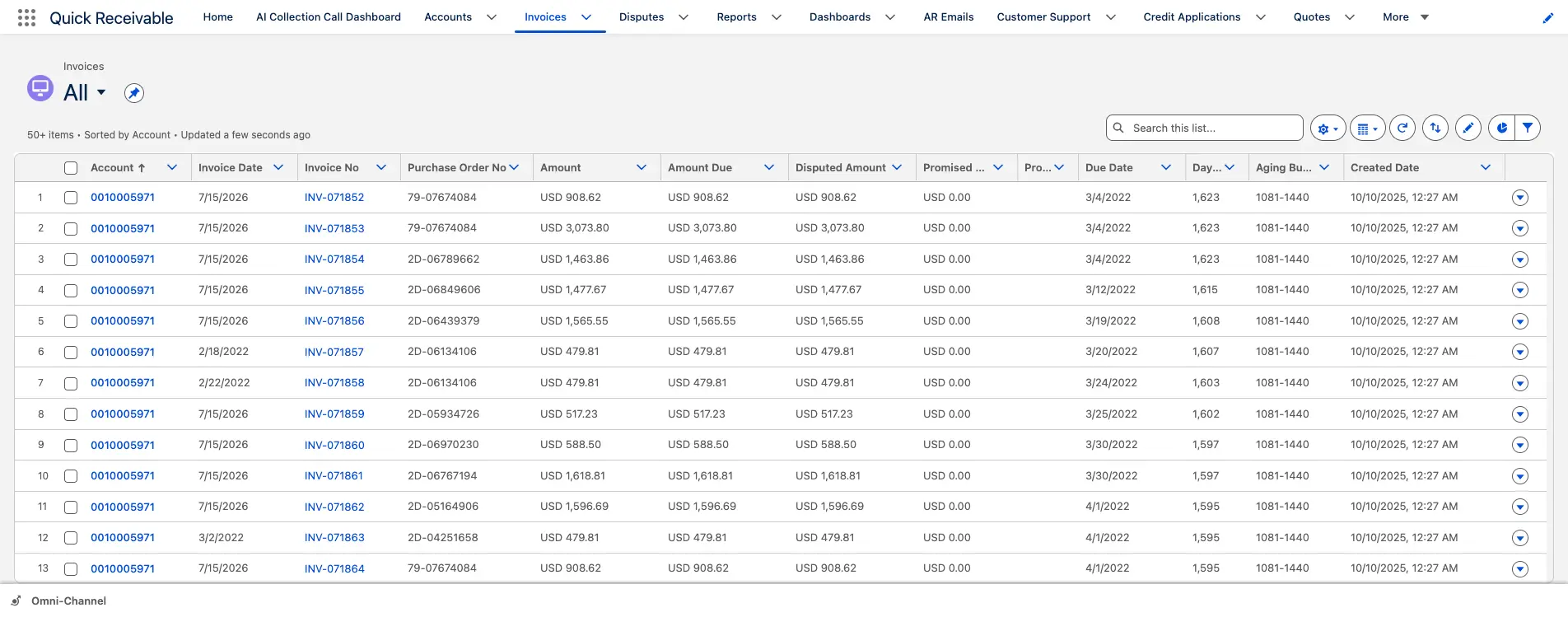
Send an outstanding statement to a buyer directly from the invoice list.
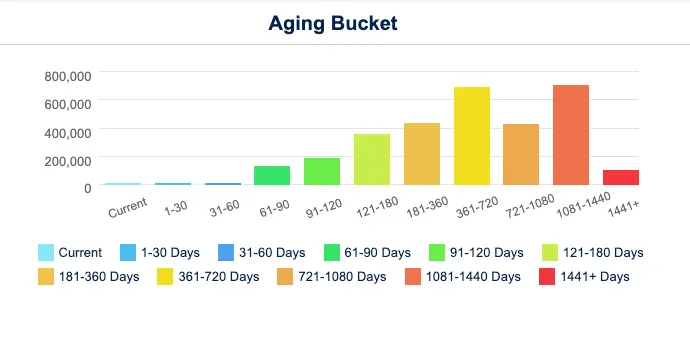
Aging buckets for 30, 60, 90, and 120+ days, with days past due on every invoice.
Five stages from early notice before the due date to final notice and broken promise.
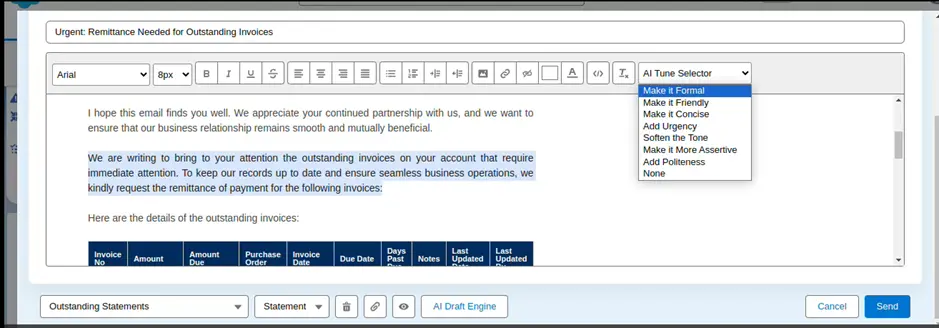
The same message softened or firmed depending on how long the buyer has been with you.
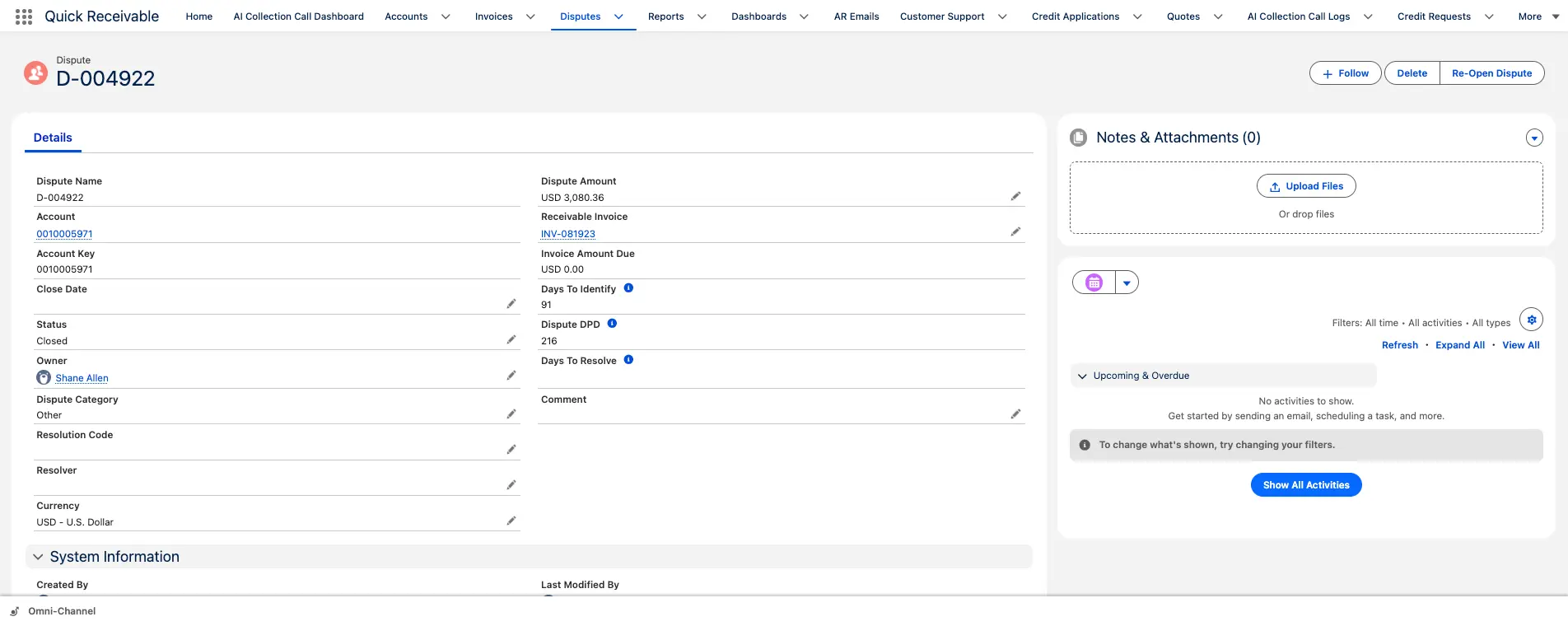
Short-pays logged as disputes with an owner, a reason, and a resolution clock.
Applications, limit requests, and a 0 to 100 score before the next order is released.
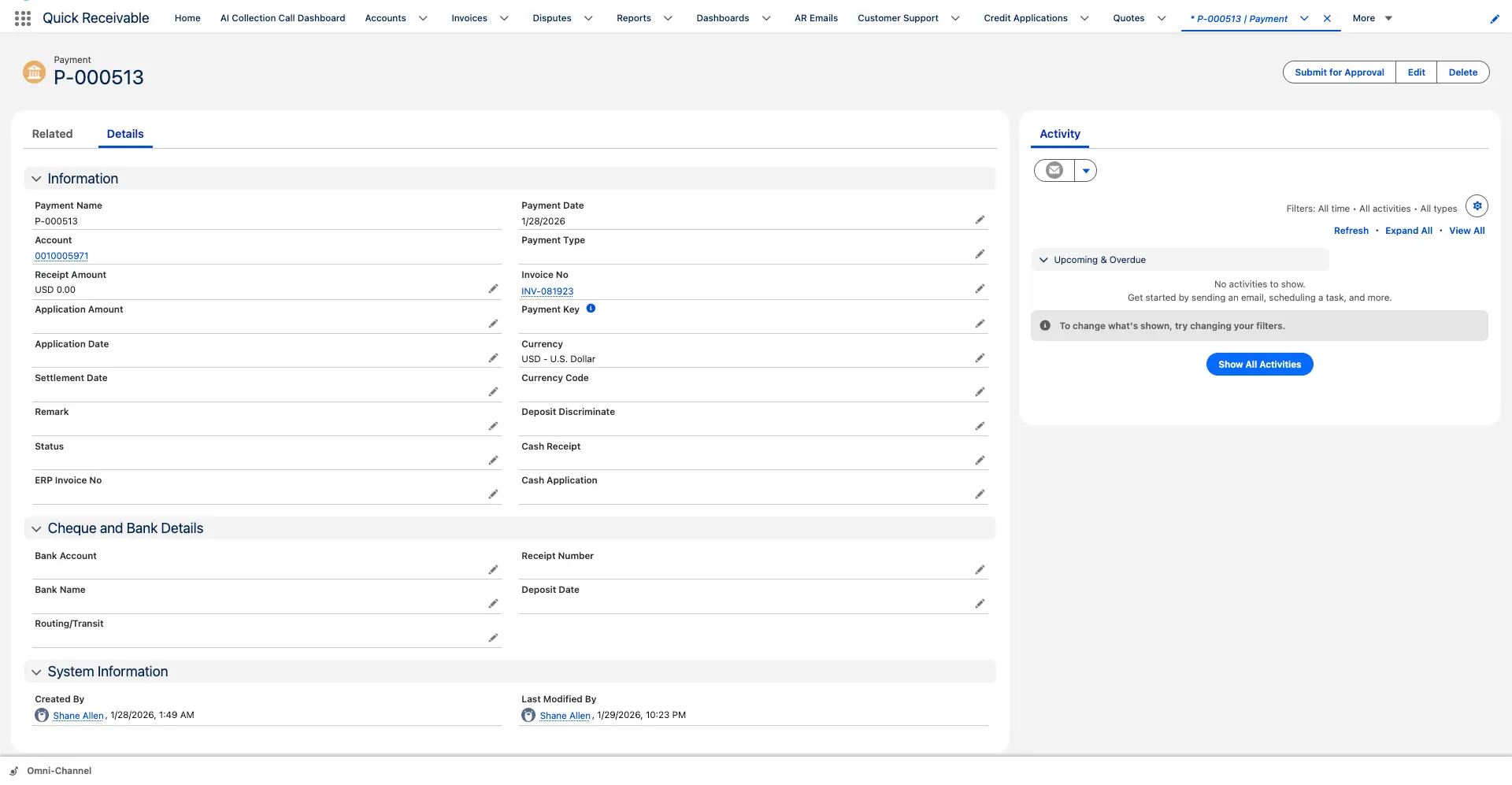
Every payment, type, applied amount, and related invoice held on the account.
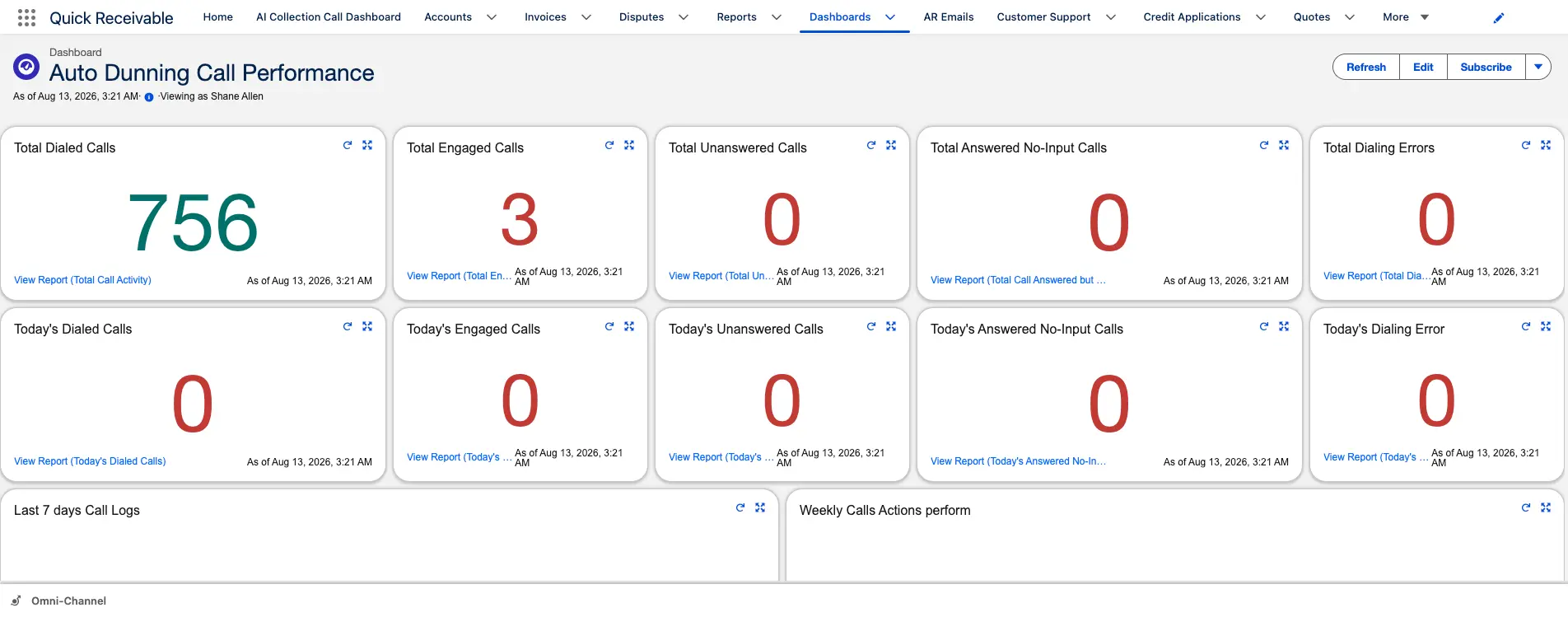
Dashboards for total AR, overdue AR, current due, DSO, and results by collector.
Figures below describe how the platform works and what it has delivered in production, not projected savings.
Reminder cycle running from early notice, through due and past due, to final notice and broken promise
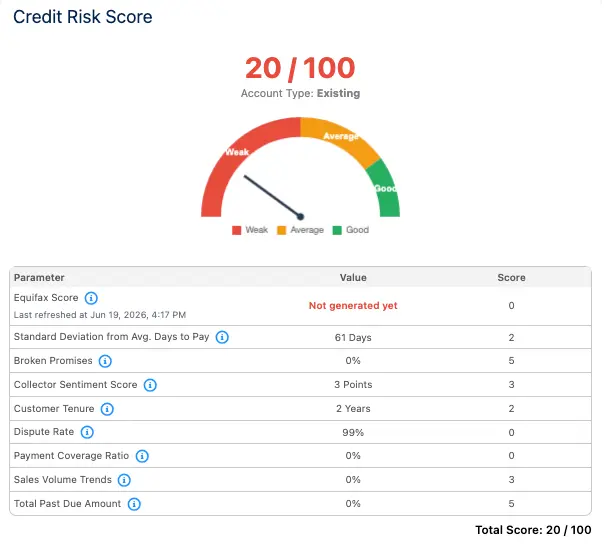
Credit risk score per buyer, combining Equifax report data, payment timing, broken promises and disputes
ERP delta synchronization in a live enterprise deployment, replacing a once-daily refresh cycle
Months to migrate a legacy collections platform with open disputes and collector notes intact
The last two figures come from a live deployment with WillScot, North America's leading provider of modular space and portable storage solutions, where Quick Receivable replaced a legacy collections system ahead of its decommissioning deadline. The full AR transformation case study covers the integration and data migration in detail.
Very few wholesale buyers announce that they are moving from net 30 to net 52. It shows up in the aging months later.
Left long enough, a stretched account becomes a placement, which is why the escalation path into debt collection software matters as much as the reminder schedule.
Five A buyer pays a few days later each season until net 30 means nothing.
The early payment discount is deducted on a payment that arrives well after the window.
Buyers net returns against open invoices before the credit is approved.
A dating program ships thousands of units against a limit set two years ago.
Nobody wants to send a firm notice to a buyer the sales director has known for a decade.
The question is always the same: has this buyer ever actually paid on time?
Importers, brand owners, and merchant wholesalers across the United States selling into independent retail, buying groups, and national accounts.
Seasonal dating, pre-book orders, and end-of-season return negotiations against open balances.
Trade show order books, long lead times, and small independent buyers on short credit lines.
Concentrated shipping windows with the receivable outstanding across the selling season.
Pre-season programs, dealer accounts, and extended terms tied to delivery dates.
Salon and spa accounts, tester allowances, and frequent small-value credit memos.
Independent retail buyers, repeat consumable orders, and buying group pricing tiers.
Memo and consignment arrangements that blur when a receivable becomes real.
Contract pricing, seasonal peaks, and co-op buying groups paying on group terms.
Invoice list with statement send and dispute flag
Wholesale collections start with a statement rather than a single invoice, because buyers reconcile by account. Everything the conversation needs sits on the record: purchase order, contract status, disputed amount, promised amount, and days past due.
A buyer stretching from thirty days to fifty rarely triggers an alarm. It reads as a healthy account with a slightly slower month. Aging by bucket, alongside average days to pay, turns that pattern into something the credit team can raise before the next season ships.
For a baseline before any software conversation, the DSO calculator gives you a starting number in two minutes.
Buyer aging from current through 1,441+ days
Reminder templates across the collection cycle
The cheapest collection is the one that happens two days before the due date. Reminders follow each invoice through its cycle, which removes the awkward judgement call about whether this particular buyer should be chased this particular week.
Sequencing and template control sit in dunning management software.
Wholesale is relationship trade. A firm notice to a long-standing account can cost more than the balance, and a soft one to a new buyer gets filed and forgotten. Tone control lets one collector handle both without drafting from scratch.
Tone adjusted without rewriting the message
Return and pricing claims tracked to resolution
Buyers net returns, damaged goods, unearned discounts, and pricing differences straight off the payment. Once that becomes routine, the open balance is permanently understated and nobody can say which claims were ever agreed.
Open claims across the buyer base are worked from one list in dispute management.
Wholesale exposure peaks exactly when it is hardest to assess, in the weeks before a season delivers. A score built from credit data and the buyer's own payment record gives the commercial team something firmer than a reference check.
Your team keeps the final decision under your own policy, with credit management in the same place collectors work.
Buyer risk score on a Weak to Good scale
Complete payment history on the buyer account
Before anyone extends a limit or approves a dating program, the same question comes up: how does this buyer actually pay? Every payment applied to the account sits on its Payments tab with the invoice it settled.
Matching and splitting are handled in cash application, with each match marked Applied or Partially Applied.
Sales owns the buyer relationship. Credit owns the exposure. Both need the same screen.
In wholesale, the argument about a buyer is never really about the invoice. It is about whether the account is worth the terms. That conversation only works when the rep and the credit manager are looking at the same aging, the same claims, and the same score. The trade-offs between native and integrated AR architecture come down to the rows below.
| Working method | Bolt-on AR tool beside the CRM | Quick Receivable inside Salesforce |
|---|---|---|
| Terms visibility for sales | Finance knows, the rep does not | Aging, credit usage and score on the account the rep opens |
| Claim status during a negotiation | Tracked in a separate queue or a spreadsheet | Open claims visible on the buyer record with owner and age |
| Data freshness | Typically once daily | Delta loads run multiple times a day in production deployments |
| Collector handover | Context lives in personal notes | Sticky note, promises, and email history on the account |
| Reporting | A second BI layer or manual exports | Salesforce dashboards, exportable to PDF or Excel |
Aging, reminders, claims, credit scoring, and payment application are modules of one accounts receivable feature set, deployed together rather than bought piece by piece.
It manages the receivable side of the order-to-cash cycle for wholesalers, covering statement billing, AR aging, payment reminders, return and pricing claims, buyer credit exposure, payment application, and reporting. Quick Receivable does this inside Salesforce, so the balance sits on the buyer record your sales team already uses.
Yes. An outstanding statement can be sent to a buyer directly from the invoice list, and replies come back into a shared AR inbox grouped by category, including statement requests, remittances, disputes, and promises to pay.
Each one is logged as a dispute against the invoice with a category, owner, resolver, and resolution code. Days to identify and days to resolve are tracked, reminders can pause while the claim is open, and a closed claim can be reopened while keeping its history.
Yes. A drafted email can be made formal, friendly, concise, or more assertive, with urgency or politeness added in one click, without changing the underlying message. The reminder schedule itself still runs on the invoice.
Credit applications capture business name, tax ID, legal entity type, and Dun and Bradstreet number, and link to a scorecard combining Equifax credit report data with payment timing, broken promises, and dispute history into a score from 0 to 100. Score history is retained so direction is visible at renewal.
Every payment applied to an account appears on its Payments tab with the payment name, date, type, applied amount, and related invoice, giving a complete payment history per buyer.
Merchant wholesalers and importers in apparel and footwear, giftware and home goods, toys and seasonal merchandise, sporting goods and outdoor, beauty and personal care, pet supplies, jewelry and accessories, and office, school and hardware lines.
Yes. Invoice records carry ERP references including order number, purchase order number, and contract status. In one enterprise deployment, delta synchronization runs three times daily, replacing a once-daily refresh that left receivables data stale for most of the business day.
Walk through statements, terms drift, return claims, and buyer credit scoring against your own process. No preparation needed.
Schedule a Free Demo