100% Salesforce native

CPG Accounts Receivable Software

Retailers do not pay consumer goods invoices, they pay what is left after deductions. Quick Receivable puts every claim, allowance, and short-pay on a clock inside Salesforce, so your team can tell which deductions were earned, which were duplicated, and which are simply never coming back.

The full cycle in one system

What CPG accounts receivable software is actually up against

An invoice, a promotion, a compliance policy, and a remittance that reconciles to none of them.

Consumer goods is the only trade where the receivable is routinely reduced before it is ever contested. Quick Receivable is the consumer brand build of the same B2B accounts receivable software used across manufacturing, distribution, and logistics, shaped around deduction volume rather than late payment.

hero-shape
1

Invoice and order detail

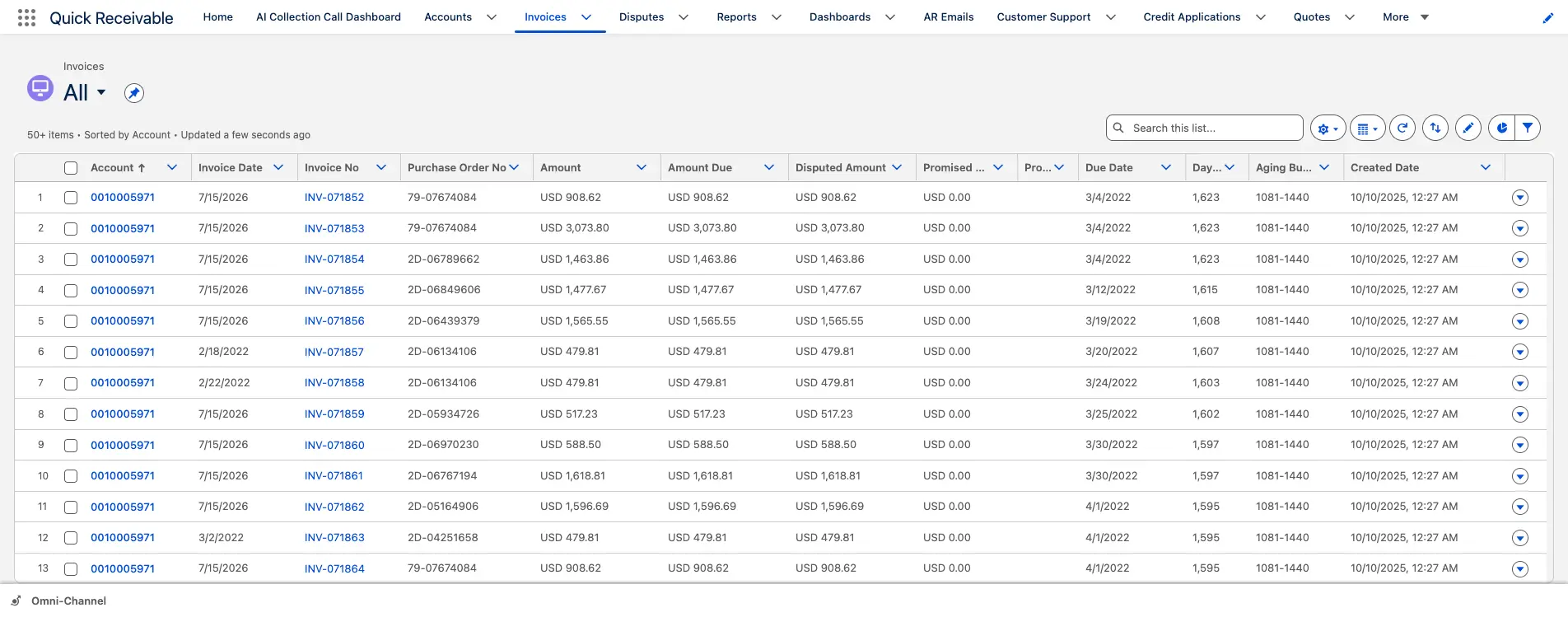
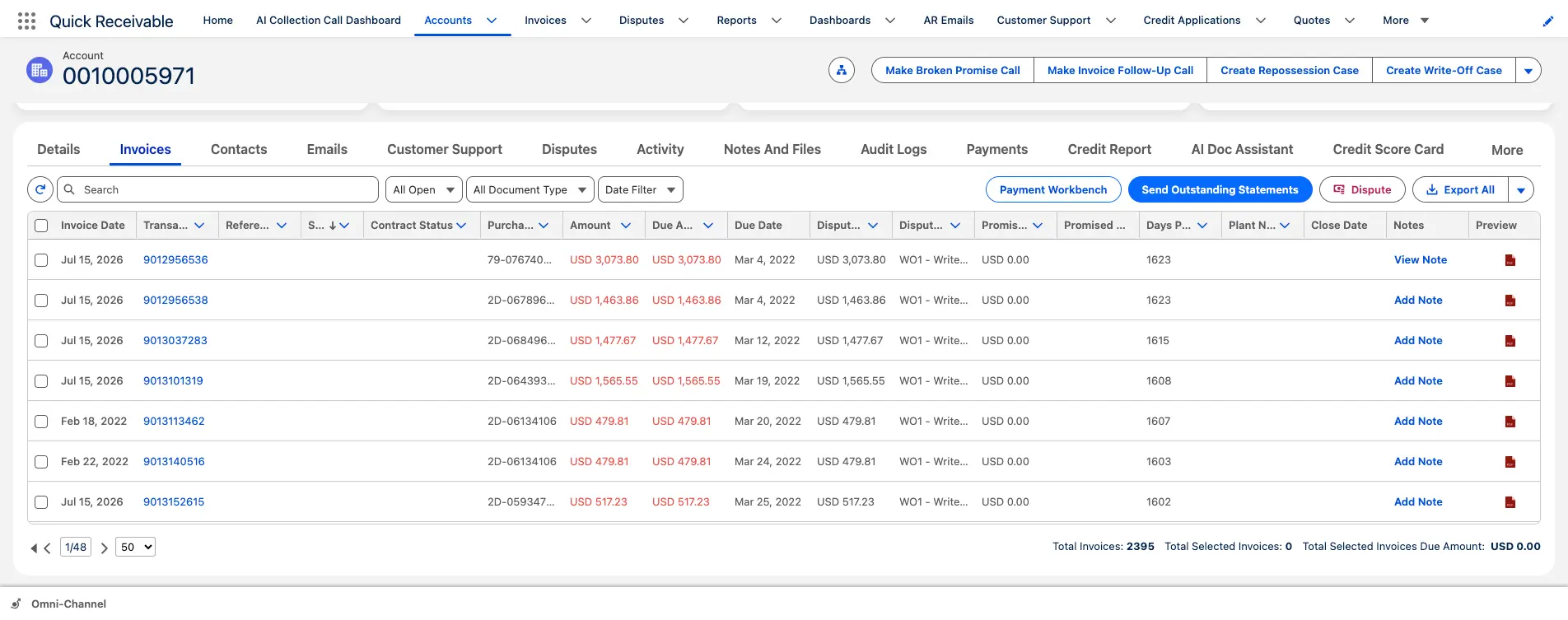
Purchase order, contract status, disputed amount, and days past due on every invoice.

2

Deduction capture

Each short-pay logged as a claim with a category, an owner, and a resolver.

3

Resolution timing

Days to identify and days to resolve recorded, so the backlog has a measurable age.

4

Customer aging

Aging buckets for 30, 60, 90, and 120+ days, with account aging running much further.

5

Reminder cycle

Early, due, past due, and final notice running automatically on every invoice.

6

Customer credit risk

Applications, limit requests, and a 0 to 100 score that counts dispute rate.

7

Cash application

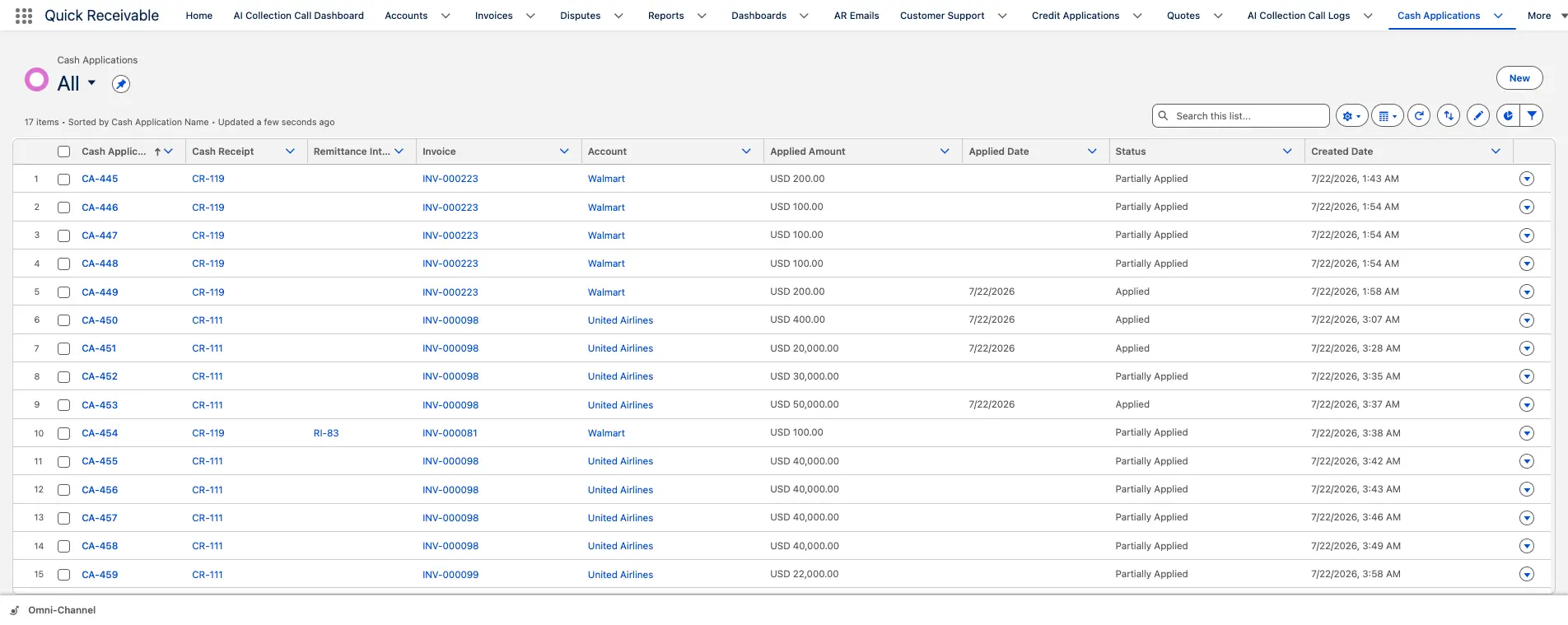
One remittance split across invoices, marked Applied or Partially Applied.

8

AR reporting

Dashboards for total AR, overdue AR, current due, DSO, and results by collector.
The numbers behind the system

Built for brands where deductions outnumber invoices

Figures below describe how the platform works and what it has delivered in production, not projected savings.

hero-shape
0 to 100

Credit risk score per customer, with dispute rate and broken promises counted alongside Equifax report data

1,441+

Days past due covered by account-level aging, so an unresolved claim never quietly ages out of view

3x daily

ERP delta synchronization in a live enterprise deployment, replacing a once-daily refresh cycle

Under 3

Months to migrate a legacy collections platform with open disputes and collector notes intact

The last two figures come from a live deployment with WillScot, North America's leading provider of modular space and portable storage solutions, where Quick Receivable replaced a legacy collections system ahead of its decommissioning deadline. The full AR transformation case study covers the integration and data migration in detail.

Pain points solved

Why the deduction backlog always wins

Deductions arrive faster than a small team can research them, so the oldest ones get written off to clear the queue. That decision is made by the calendar, not by the evidence.

Brands generally look at accounts receivable management software once the write-off line stops being explainable to the board.

hero-shape
1

Promotional deductions taken twice

The same allowance is deducted off-invoice and again as a post-audit claim months later.

  • Every claim carries a category and a resolution code
  • Claim history retained against the customer
  • Open claims viewed across the business from one list
2

Compliance chargebacks

Late delivery, labelling, routing, and ASN penalties arrive as line items with no explanation attached.

  • Disputed amount flagged against the invoice
  • Owner and resolver assigned to each chargeback
  • Days to identify and days to resolve measured
3

Shortage and damage claims

Quantities received are disputed weeks after the pallet left the warehouse.

  • Claim logged against the specific invoice
  • Reminders pause while the claim is genuinely open
  • Closed claims reopened without losing the trail
4

Backlog with no age

Nobody can say whether the open claim pile is thirty days old or three hundred.

  • Resolution timing recorded per claim
  • Account aging running through 360, 720, and 1,441+ days
  • Top overdue accounts and invoices surfaced automatically
5

Sales unaware of the cost

A promotion is renewed while the last one is still generating unresolved claims.

  • Open claims visible on the customer record
  • Dispute rate counted into the customer's risk score
  • Shared sticky note carrying the current position
6

Remittances nobody can unpick

A single payment settles eighty invoices and reduces nineteen of them by different amounts.

  • Split a single payment across multiple invoices
  • Mark each match Applied or Partially Applied
  • Trace any applied amount back to the original receipt
Who this is built for

Accounts receivable automation for consumer brands

Consumer packaged goods businesses across the United States selling into grocery, mass, club, drug, convenience, and specialty retail through direct and distributor routes.

hero-shape

Food and snacks

Short shelf life, spoilage claims, and promotional calendars running across multiple banners.

Beverages

High case volume, display allowances, and route-based delivery adjustments.

Household and cleaning

Large-format promotions, club packs, and frequent pricing changes between order and delivery.

Health and beauty

Shelf resets, testers, and returns programmes that generate recurring credit activity.

Pet food and supplies

Mixed retail and specialty channels, each with different allowance structures.

Emerging and natural brands

Small finance teams facing the same deduction volume as national competitors.

Apparel and softlines

Seasonal markdown support, return-to-vendor claims, and end-of-season settlements.

Housewares and small appliance

Warranty credits, display units, and freight allowance deductions on bulky goods.

Deduction management

Retail customers ranked by exposure and priority

Deduction management

Retailer deduction management that survives the volume

The problem in consumer goods is never identifying a deduction. It is deciding which ones are worth researching with the hours available. Ranking customers by exposure and claim volume makes that a decision rather than a reflex.

  • Priority score on every account to order the day's work
  • Credit limit and total past-due balance shown together
  • Aging balances grouped by 30, 60, 90, and 120+ days past due
  • Named analyst assigned to each customer

Reason-code reporting across the portfolio runs through AR deductions management software.

Claims and chargebacks

Every trade promotion claim and compliance chargeback on a clock

A deduction without an owner and a deadline is a write-off waiting to happen. Once each claim carries a category, a resolver, and a measured age, the backlog stops being a single unexplained number in the ledger.

Dispute CategoryOwnerResolverResolution CodeDays to IdentifyDays to Resolve
  • Flag an invoice as disputed with one click
  • Collection reminders pause while a claim is genuinely open
  • Reopen a closed claim without losing its history
  • View open claims across every customer from one list

Resolution workflow and history sit in dispute management.

AR Aging

Invoices carrying disputed amount and days past due

AI assistance

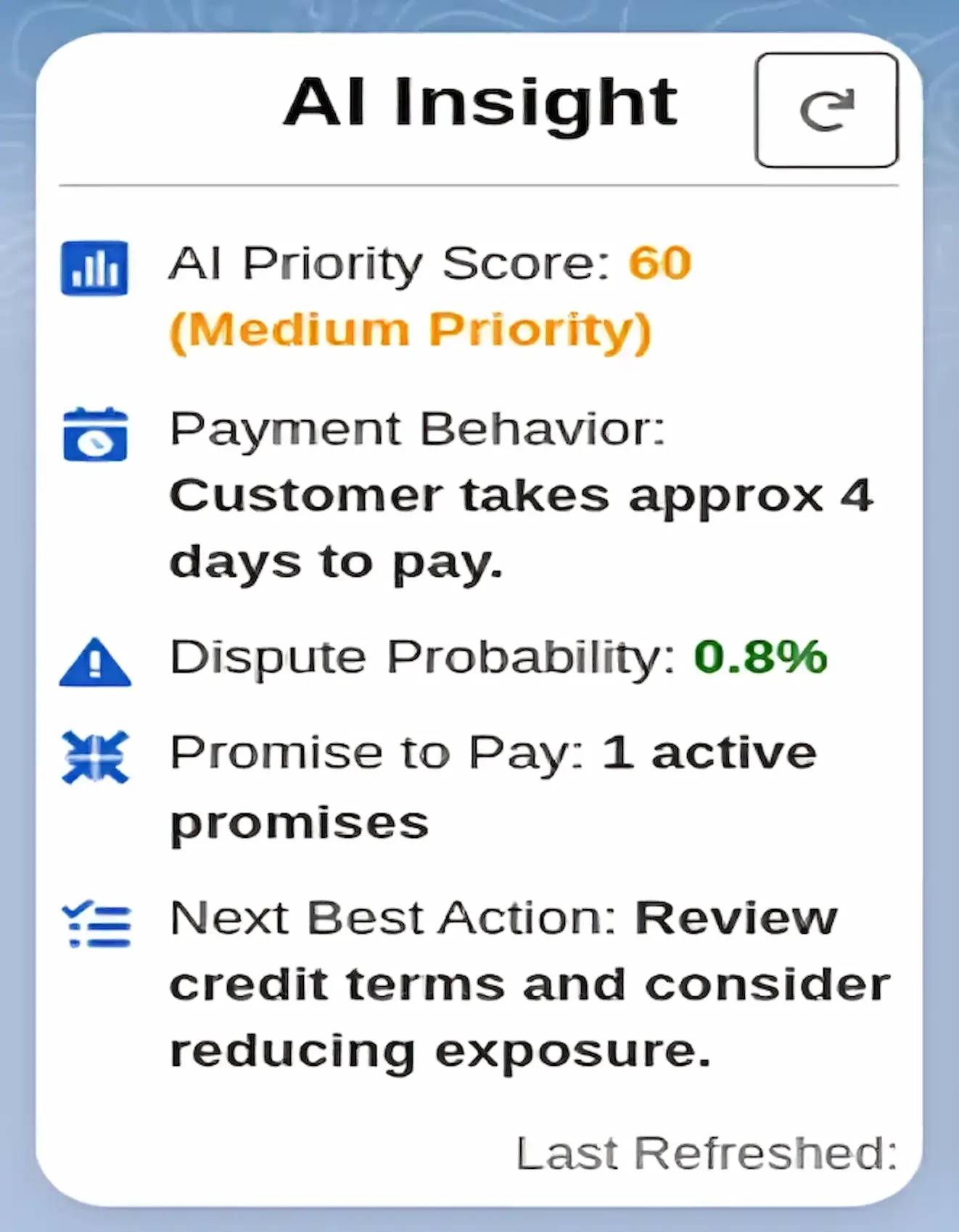
Priority score and dispute probability by account

Short-pays and claims

Knowing which accounts will generate the next claim

Deduction teams are permanently behind, so the useful question is not what happened last month but where the next problem is forming. AI Insight reads overdue balances, disputes, payment behaviour, and credit use to rank accounts before the work is allocated.

  • Weighted AI Priority Score for every account
  • Dispute probability based on account history
  • Recommended next best action, refreshed when needed
  • AI classification of incoming claim correspondence
AR aging

CPG AR aging that separates real lateness from open claims

A brand's aging report usually overstates the problem, because deducted balances sit in the same buckets as genuinely late invoices. Separating the two changes the conversation with sales, since one is a collections issue and the other is a trade spend issue.

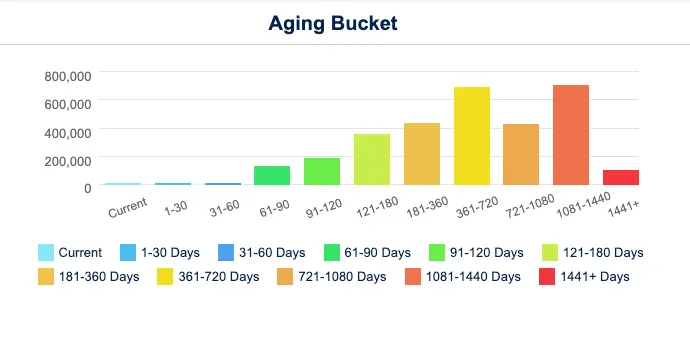
  • Portfolio aging columns for 30, 60, 90, and 120+ days past due
  • Account-level chart continuing through 360, 720, and 1,441+ days
  • Disputed amount held on the invoice alongside days past due
  • Management dashboard covering total AR, overdue AR, current due, and DSO

To size the gap before any software conversation, the DSO calculator takes two minutes.

AR aging

Aging that keeps unresolved claims visible

Credit and risk

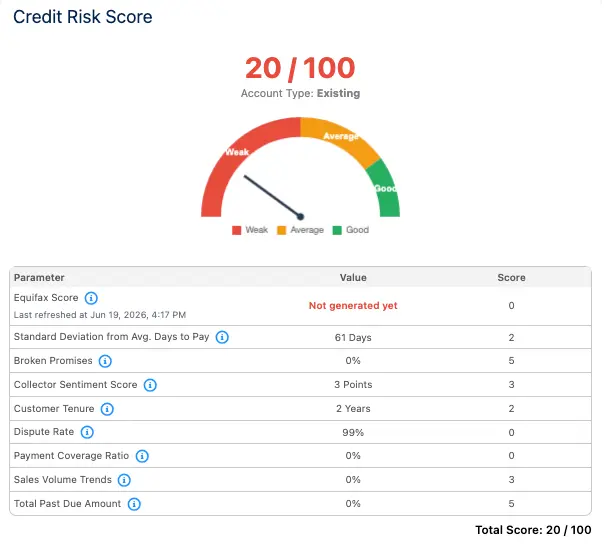
Customer risk score including dispute rate

Credit and risk

Customer risk that counts deduction behaviour, not just payment dates

A retailer or distributor that pays on time while deducting eight percent of every invoice is not a low-risk account. Because dispute rate feeds the score alongside payment timing, that pattern shows up where the commercial team can see it.

  • Equifax credit report data combined with payment timing
  • Dispute rate and broken promises counted into the score
  • Score shown from 0 to 100 on a Weak to Good scale
  • Score history retained so direction is visible at review

Your team keeps the final decision under your own policy, with credit management in the same place analysts work.

Payments and cash

Cash application where the deduction is buried in the remittance

Retail remittances are where claims are born. A payment covering eighty invoices with nineteen reductions has to be unpicked line by line, or those nineteen reductions never become claims at all and simply become the new balance.

  • Split one payment across multiple invoices when needed
  • Mark each match Applied or Partially Applied
  • Cash Receipt Remittance Mapping records how the payment was divided
  • Complete payment history retained per customer

That trail is what keeps month-end cash application defensible when auditors ask.

Payments and cash

Remittance split across invoices and deductions

Salesforce native

Why consumer brands run accounts receivable inside Salesforce

Deductions are a commercial matter long before they are an accounting one.

In consumer goods the deduction backlog is really a record of what the trade relationship costs. Keeping claims, aging, and credit exposure on the account the sales team already opens means the promotion conversation and the deduction conversation finally happen in the same place. The trade-offs between native and integrated AR architecture come down to the rows below.

hero-shape
Working methodBolt-on AR tool beside the CRMQuick Receivable inside Salesforce
Claim visibility for salesHeld in a deduction queue finance ownsOpen claims on the customer record with owner and age
True cost of a promotionReconstructed manually after the eventClaim history retained against the customer over time
Data freshnessTypically once dailyDelta loads run multiple times a day in production deployments
Risk assessmentPayment dates onlyDispute rate and broken promises scored alongside credit data
ReportingA second BI layer or manual exportsSalesforce dashboards, exportable to PDF or Excel

Aging, reminders, claims, credit scoring, and cash application are modules of one accounts receivable feature set, deployed together rather than bought separately.

CPG accounts receivable software FAQs

hero-shape

What is CPG accounts receivable software?

It manages the receivable side of the order-to-cash cycle for consumer goods brands, covering invoice detail, retailer deductions and chargebacks, AR aging, collections, payment reminders, customer credit risk, cash application, and reporting. Quick Receivable does this inside Salesforce, so claims and balances sit on the same customer record your sales team uses.

How are retailer deductions captured and worked?

Each deduction is logged as a dispute against the invoice with a category, owner, resolver, and resolution code. Days to identify and days to resolve are tracked, collection reminders can pause while the claim is open, and a closed claim can be reopened while keeping its full history.

Can we see how old the open claim backlog is?

Yes. Resolution timing is recorded per claim, open claims across every customer can be viewed from one list, and account-level aging continues past 120 days through 360, 720, and 1,441+ days so nothing disappears into a final bucket.

Does deduction behaviour affect the customer risk score?

Yes. Dispute rate and broken promises are counted alongside Equifax credit report data and payment timing in a score from 0 to 100 shown on a Weak to Good scale, with score history retained so direction is visible at review.

How does it handle a remittance containing many deductions?

Available remittance information matches the receipt to the correct invoices. The payment splits across them, each match is marked Applied or Partially Applied, and remittance mapping records the split so any applied amount traces back to the original cash receipt.

Can it help prioritise which claims to research first?

AI Insight assigns a weighted priority score to each account, estimates dispute probability from account history, and recommends a next action, which lets a small team allocate research time by exposure rather than by whichever claim arrived most recently.

Which consumer goods categories does it suit?

Food and snacks, beverages, household and cleaning, health and beauty, pet food and supplies, emerging and natural brands, apparel and softlines, and housewares and small appliances.

Does it replace our trade promotion management system?

No. It handles the receivable and deduction side and works alongside the system where promotions are planned. Invoice records carry references including order number, purchase order number, and contract status, and in one enterprise deployment delta synchronization runs three times daily.

See your CPG deductions running in a live Salesforce org

Walk through claim capture, resolution timing, retail customer aging, and remittance matching against your own process. No preparation needed.

Schedule a Free Demo