100% Salesforce native

Logistics Accounts Receivable Software

Freight bills get paid when the paperwork matches. Quick Receivable tracks every open freight invoice, accessorial short-pay, document request, and payment commitment inside Salesforce, so your billing team stops rebuilding the same load history for every customer query.

The full cycle in one system

What logistics accounts receivable software has to keep straight

Thousands of small invoices, each one tied to a load, a document, and a rate somebody may dispute.

In freight the invoice is rarely refused outright. It is reduced, queried, or held pending paperwork, which is a slower and more expensive problem. Quick Receivable is the logistics build of the same B2B accounts receivable software used across manufacturing, distribution, and construction, shaped around load-level billing and document-driven delay.

hero-shape
1

Freight bill visibility

Order reference, purchase order, contract status, disputed amount, and days past due.

2

Customer aging

Aging buckets for 30, 60, 90, and 120+ days, with account aging running much further.

3

Document requests

Proof of delivery and statement requests arriving into a categorized shared inbox.

4

Reminder cycle

Early, due, past due, and final notice running automatically on every freight bill.

5

Accessorial short-pays

Detention, fuel, and layover deductions logged with a category, owner, and resolver.

6

Customer credit risk

Applications, limit requests, and a 0 to 100 score before extending more capacity.

7

Cash application

One remittance split across dozens of freight bills, marked Applied or Partially Applied.

8

AR reporting

Dashboards for total AR, overdue AR, current due, DSO, and results by collector.
The numbers behind the system

Built for carriers and brokers invoicing by the load

Figures below describe how the platform works and what it has delivered in production, not projected savings.

hero-shape
5 stage

Reminder cycle running from early notice, through due and past due, to final notice and broken promise

0 to 100

Credit risk score per customer, combining Equifax report data, payment timing, broken promises and disputes

3x daily

ERP delta synchronization in a live enterprise deployment, replacing a once-daily refresh cycle

Under 3

Months to migrate a legacy collections platform with open disputes and collector notes intact

The last two figures come from a live deployment with WillScot, North America's leading provider of modular space and portable storage solutions, a business moving and billing equipment across the country. The full AR transformation case study covers the integration and data migration in detail.

Pain points solved

Why freight receivables leak rather than age

The loss in logistics is rarely a bad debt write-off. It is fifty dollars off a thousand invoices that nobody had time to contest.

That pattern is what pushes billing teams toward accounts receivable collections software once the invoice count outgrows the spreadsheet.

hero-shape
1

Accessorials deducted on sight

Detention, layover, and fuel adjustments are removed at payment with no claim raised.

  • Disputed amount flagged against the freight bill
  • Category, owner, and resolver assigned to each short-pay
  • Days to identify and days to resolve measured
2

Invoices held for paperwork

Payment waits on a delivery document that was requested weeks ago by someone else.

  • Requests arriving into a categorized shared AR inbox
  • Documents attached to the account for reference
  • Statement sent directly from the invoice list
3

Volume that hides the pattern

One customer short-pays every load by a small amount and nobody totals it.

  • Open claims viewed across the business from one list
  • Dispute rate counted into the customer's risk score
  • Top overdue accounts and invoices surfaced automatically
4

Broker and shipper exposure

Capacity keeps being committed to a customer whose payment behaviour is deteriorating.

  • Credit usage percentage shown on the account
  • Score built from credit data and payment timing
  • Score history retained so direction is visible
5

Follow-up that never fits the day

Billing staff spend the morning on document requests and never reach the aging report.

  • Reminders running automatically on every freight bill
  • Promised amount and date recorded when a customer commits
  • Broken promise follow-up ready as a template
6

Remittances that cover a fortnight

One payment settles ninety freight bills and reduces eleven of them without explanation.

  • Split a single payment across multiple invoices
  • Mark each match Applied or Partially Applied
  • Trace any applied amount back to the original receipt
Who this is built for

Accounts receivable automation across freight and logistics

Asset-based carriers, brokers, and warehouse operators across the United States, billing shippers, retailers, and manufacturers on very different terms.

hero-shape

Truckload carriers

Long-haul lanes, detention and layover charges, and dedicated contract billing.

LTL and regional

Very high invoice counts at low values, with reweigh and reclass adjustments.

Freight brokerage and 3PL

Margin squeezed between carrier pay and customer terms on every load.

Drayage and intermodal

Per diem, chassis, and demurrage charges that customers routinely contest.

Warehousing and fulfillment

Storage, handling, and pick fees billed monthly against a service agreement.

Final mile and courier

Thousands of small deliveries billed to retail and appliance customers.

Cold chain and specialized

Temperature claims, equipment charges, and rejected load disputes.

Forwarding and customs

Duty, disbursement, and third-party charges recovered on the same invoice.

Freight bill tracking

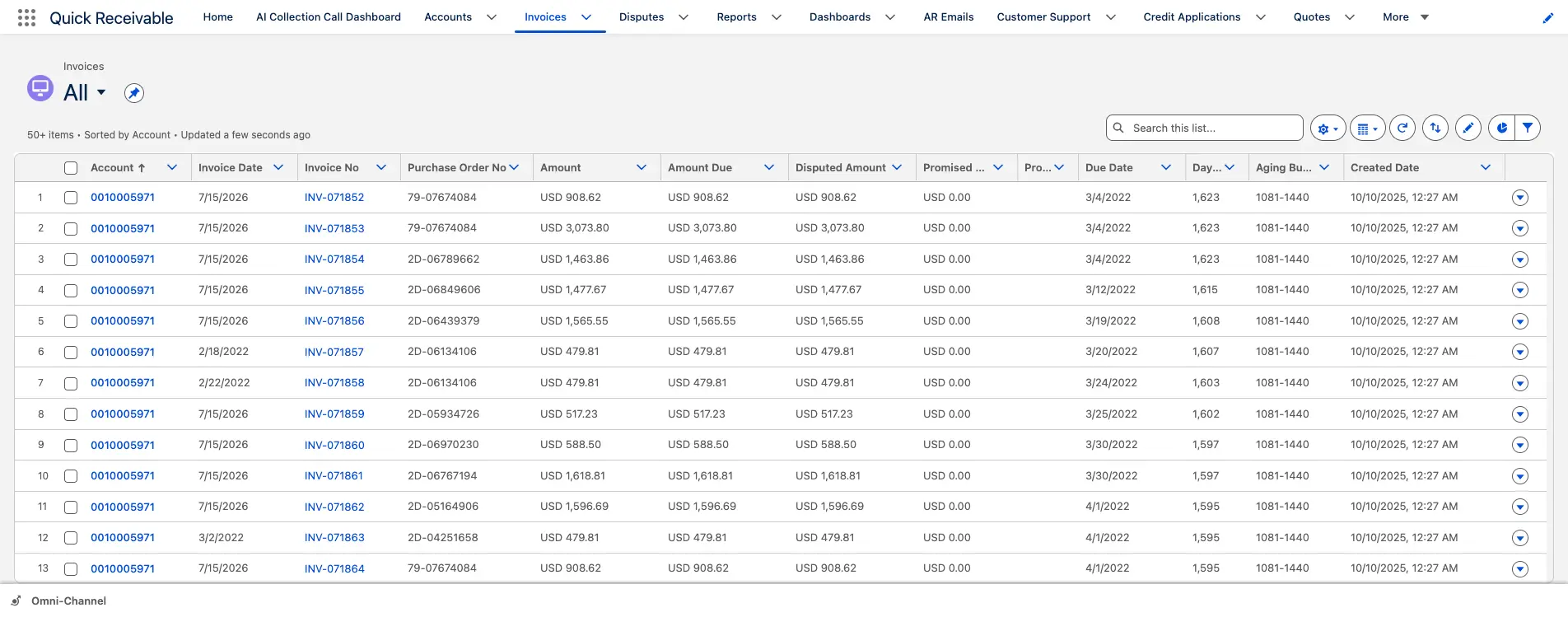
Freight bills with order reference and dispute flag

Freight bill tracking

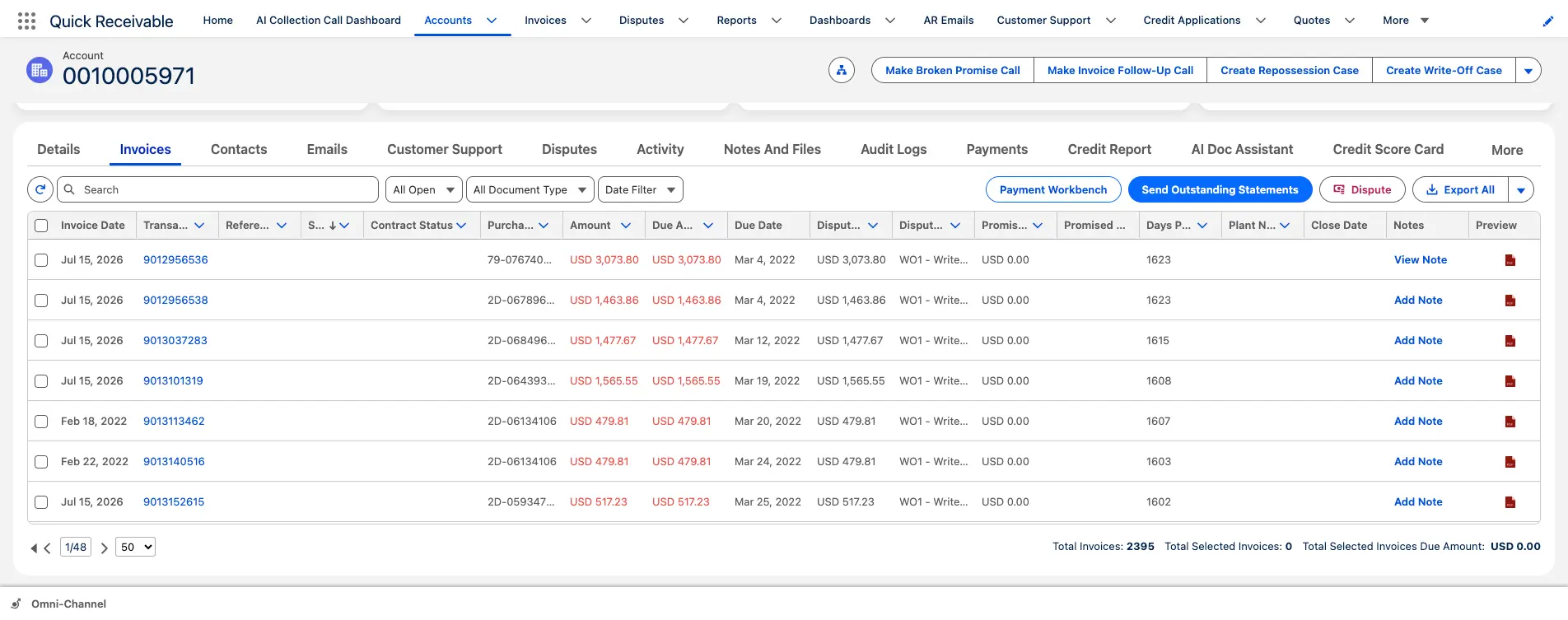
Every reference a shipper's payables team will ask for

Freight payment teams and audit providers match on references, not on invoice numbers. When the order reference or purchase order is missing, the bill is not disputed, it is simply parked until someone supplies it.

Order ReferencePurchase Order No.Contract StatusDisputed AmountPromised AmountDays Past Due
  • Send an outstanding statement directly from the invoice list
  • Flag a freight bill as disputed with one click
  • Apply a payment from the same screen using Payment Workbench
Customer visibility

Work the customer, not the load

A carrier chasing individual freight bills will never catch up, because the volume regenerates every week. Ranking customers by exposure turns an impossible list into a manageable one, and it exposes the accounts that are quietly reducing every invoice.

  • Priority score on every account to order the day's work
  • Credit limit and total past-due balance shown together
  • Aging balances grouped by 30, 60, 90, and 120+ days past due
  • Named collector and shared sticky note carrying the context

To size the delay in cash terms first, the DSO calculator takes two minutes.

Customer visibility

Customers ranked by past due and priority score

Short-pays and claims

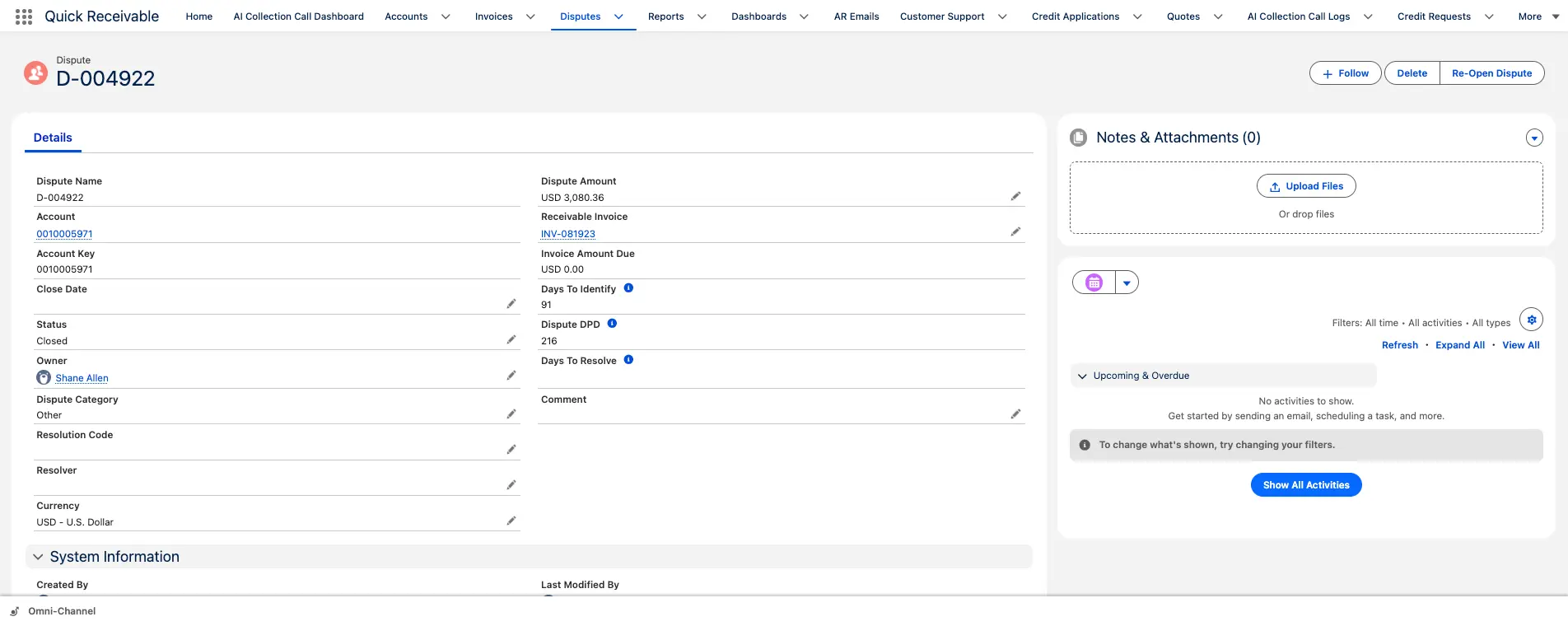
Accessorial short-pay tracked to resolution

Short-pays and claims

Accessorial and rate deductions recovered instead of absorbed

Detention billed at four hours and paid at two. A fuel surcharge calculated on a different index. A reweigh adjustment applied without notice. Individually these are small enough to ignore, and that is precisely why they accumulate into real money across a year of loads.

  • Category, owner, resolver, and resolution code on every claim
  • Days to identify and days to resolve measured per claim
  • Collection reminders pause while a claim is genuinely open
  • Reopen a closed claim without losing its history
  • Open claims across every customer visible in one list

Where deductions run at volume, reason-code reporting is handled in AR deductions management software.

Document requests

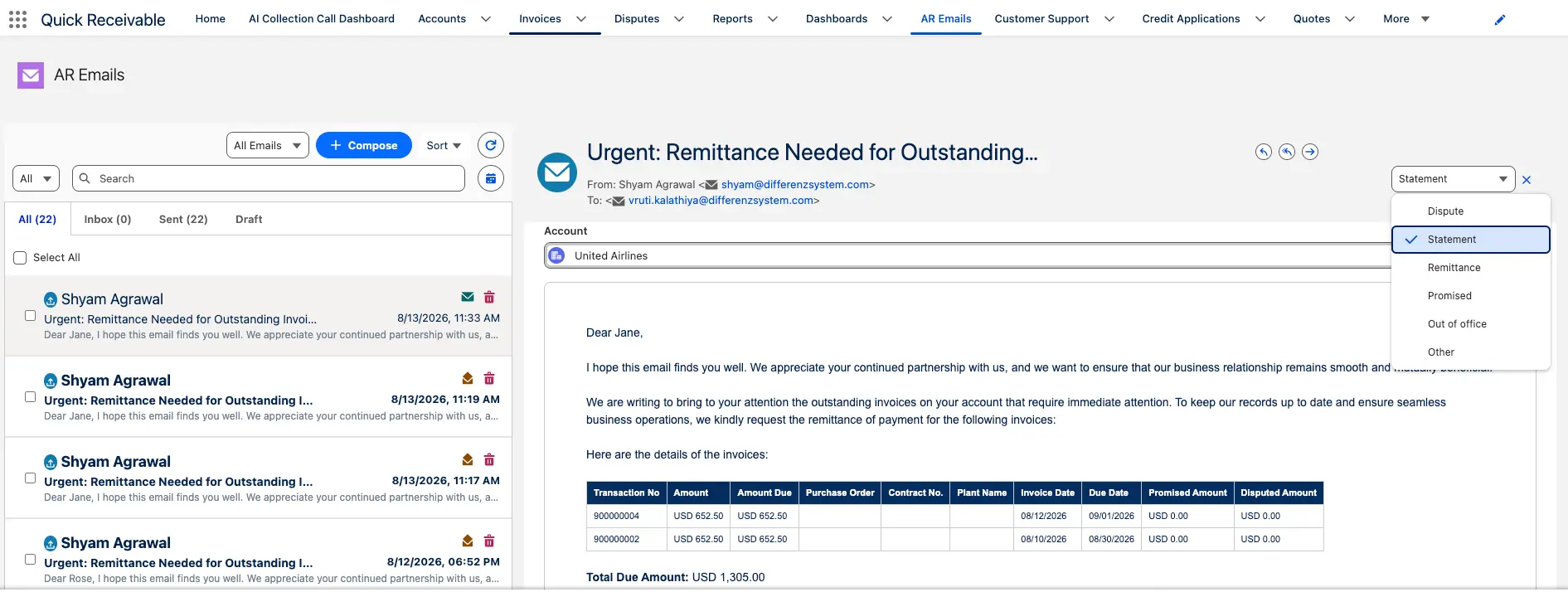
Paperwork requests answered without stalling the whole invoice

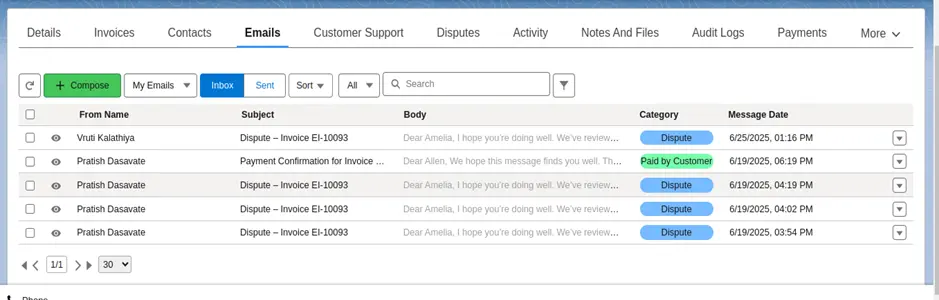
A large share of freight collections work is not collection at all. It is customers asking for a copy of something. Handled through personal mailboxes, those requests arrive twice, get answered once, and the invoice stays open through both.

StatementDisputeRemittancePromisedInvoice RequestPO UpdateOut of Office
  • Requests grouped by category rather than by sender
  • Documents uploaded to the account and searchable by question
  • Filter by sender, subject, or category to find a thread quickly
  • Ready-made templates from early reminder through final notice
Document requests

Document and statement requests in one inbox

AI assistance

Incoming replies classified and routed

AI assistance

Sorting the reply pile before the billing team opens it

At load-level invoice volume, the inbox is the bottleneck. A remittance advice, a detention query, and an automated out-of-office all look the same in an unread list, and the query is the one that costs money if it waits.

  • Account, invoice number, payment status, and email type identified
  • Promise-to-Pay records created from classified emails
  • Follow-up tasks created based on the email category
  • Short-pay queries routed into the claim queue

Reminder timing alongside that flow is configured in payment reminder software.

Credit and risk

Shipper and broker credit checked before more capacity is committed

Freight credit decisions are made quickly and revisited rarely. A broker that pays in sixty days instead of thirty does not trigger a review, it just quietly doubles the exposure carried against that name.

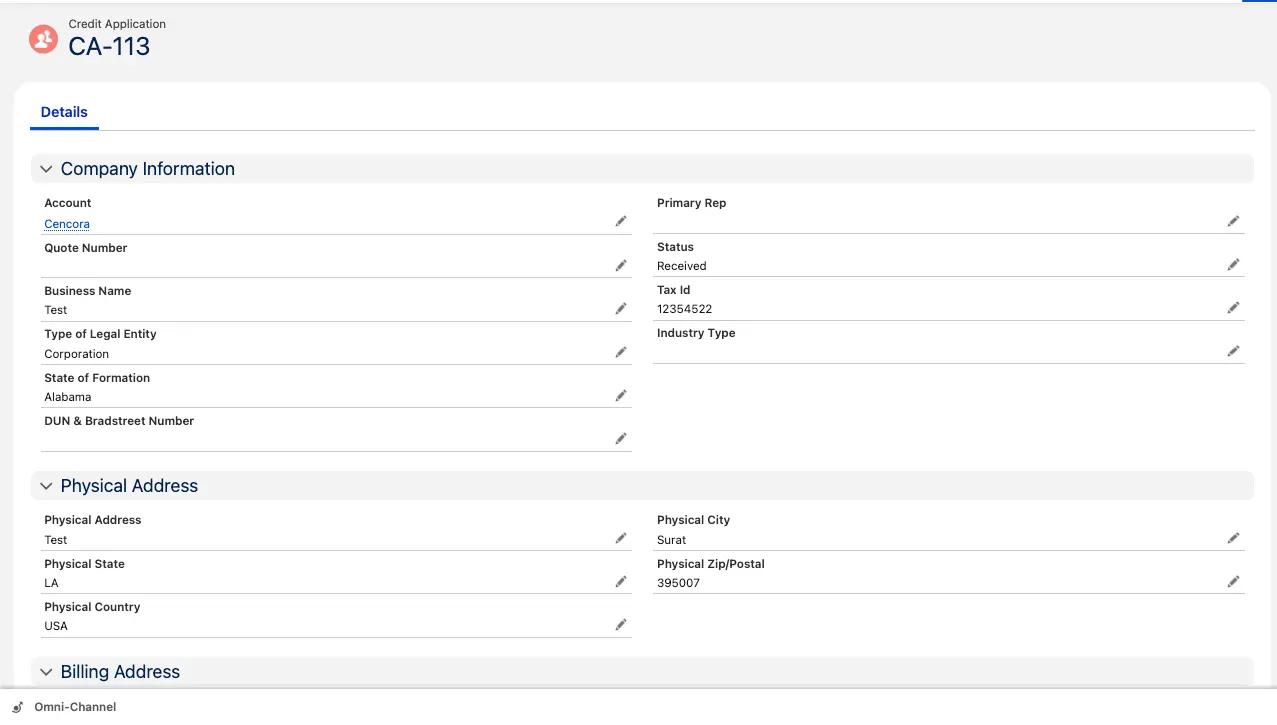
  • Applications capture business name, tax ID, legal entity type, and D&B number
  • Every application links to its Credit Risk Scorecard
  • Equifax data combined with payment timing, broken promises, and dispute rate
  • Score history retained so deterioration shows before the next contract

Your team keeps the final decision under your own policy, with credit management in the same place collectors work.

Credit and risk

Customer credit application and risk scorecard

Payments and cash

One remittance split across many freight bills

Payments and cash

Cash application when one remittance covers ninety loads

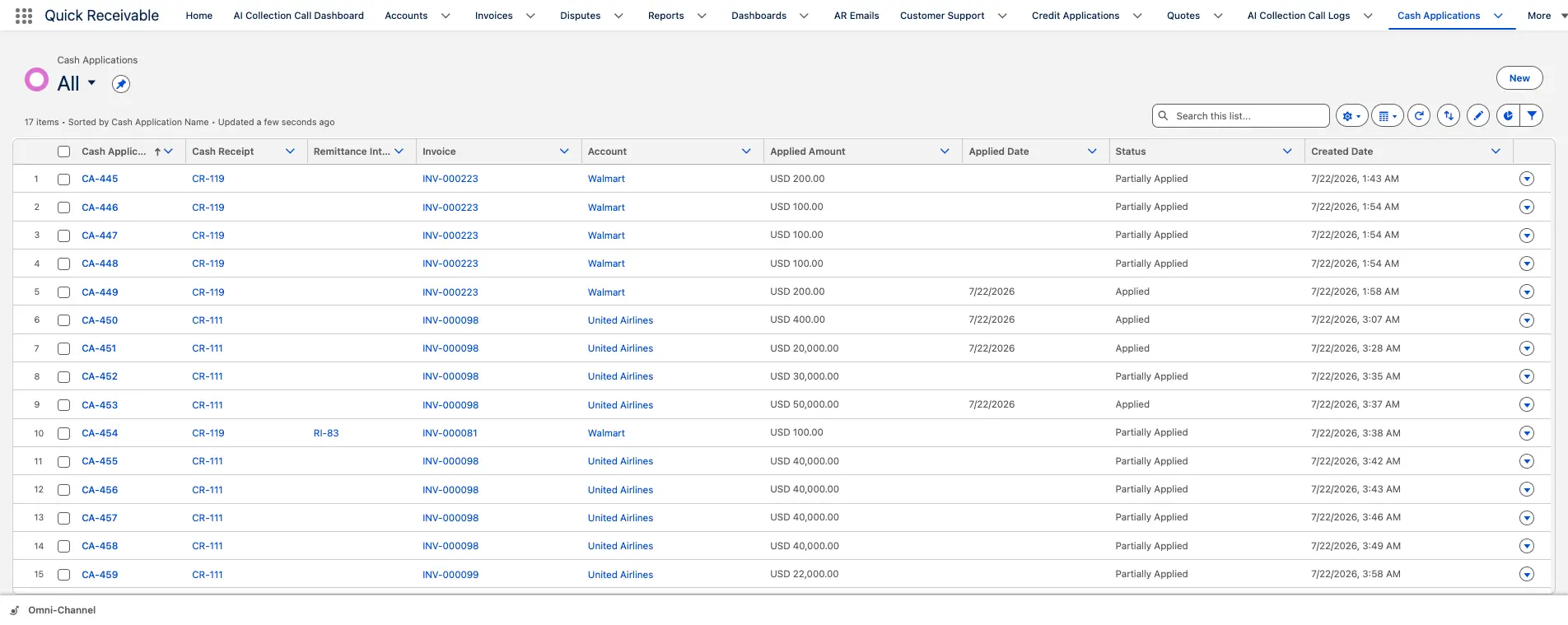
Freight payments arrive in batches, frequently through a third-party payment provider, with the detail supplied separately. Matching them by hand is where short-pays disappear, because a partially settled bill looks paid unless somebody checks the line.

  • Split one payment across multiple freight bills
  • Mark each match Applied or Partially Applied
  • Cash Receipt Remittance Mapping records how the payment was divided
  • Complete payment history retained per customer

That trail is what keeps month-end cash application defensible when auditors ask.

Salesforce native

Why carriers and brokers run accounts receivable inside Salesforce

The team booking the freight and the team billing it are usually looking at different screens.

Logistics sells capacity on credit, often at speed. A customer service rep accepting another load has no natural reason to know that the same customer has eleven open short-pays. Putting aging, claims, and credit usage on the account they already open changes that without adding a process. The trade-offs between native and integrated AR architecture come down to the rows below.

hero-shape
Working methodBolt-on AR tool beside the CRMQuick Receivable inside Salesforce
Exposure before booking a loadFinance knows, the rep does notAging, credit usage and score on the account everyone opens
Short-pay history by customerTracked per invoice, if at allOpen claims and dispute rate visible on the customer record
Data freshnessTypically once dailyDelta loads run multiple times a day in production deployments
Document and statement requestsPersonal mailboxes and forwarded threadsShared AR inbox with categorized, classified email
ReportingA second BI layer or manual exportsSalesforce dashboards, exportable to PDF or Excel

Aging, reminders, claims, credit scoring, and cash application are modules of one accounts receivable feature set, deployed together rather than bought separately.

Logistics accounts receivable software FAQs

hero-shape

What is logistics accounts receivable software?

It manages the receivable side of the billing cycle for carriers, brokers, and logistics providers, covering freight bill visibility, AR aging, collections, payment reminders, accessorial short-pays and disputes, customer credit risk, cash application, and reporting. Quick Receivable does this inside Salesforce, so the balance sits on the same customer record your commercial team uses.

How are accessorial short-pays handled?

Each deduction is logged as a dispute against the freight bill with a category, owner, resolver, and resolution code. Days to identify and days to resolve are tracked, reminders can pause while the claim is open, and a closed claim can be reopened while keeping its history.

Can it cope with load-level invoice volume?

Yes. Work is organised by customer rather than by individual freight bill, with accounts ranked by past due balance, credit limit, or priority score, and reminders running automatically on each invoice through the full cycle.

What happens with customer document requests?

Requests arrive into a shared AR inbox grouped into categories including statement, dispute, remittance, promised, invoice request, purchase order update, and out of office. Documents uploaded to an account can be queried in plain language to find the detail a customer is asking about.

Can we assess a broker or shipper before extending credit?

Yes. A credit application captures business name, tax ID, legal entity type, and Dun and Bradstreet number, and links to a scorecard combining Equifax credit report data with payment timing, broken promises, and dispute history into a score from 0 to 100. Your team still makes the final decision under your own credit policy.

How does it apply one remittance covering many freight bills?

Available remittance information matches the receipt to the correct invoices. The payment splits across them, each match is marked Applied or Partially Applied, and remittance mapping records the split so any applied amount traces back to the original cash receipt.

Which logistics sectors does it suit?

Truckload and LTL carriers, freight brokerage and third-party logistics, drayage and intermodal, warehousing and fulfillment, final mile and courier, cold chain and specialized haulage, and freight forwarding and customs brokerage.

Does it replace our transportation management system?

No. It handles the receivable side and works alongside the system where loads and freight bills originate. Invoice records carry references including order number, purchase order number, and contract status, and in one enterprise deployment delta synchronization runs three times daily.

See your freight AR running in a live Salesforce org

Walk through customer aging, accessorial short-pays, document requests, and batch remittance matching against your own process. No preparation needed.

Schedule a Free Demo