Quick Receivable runs your order-to-cash follow-up inside Salesforce, across every plant, division, and dealer account. Track AR aging, deductions, disputes, credit risk, promises to pay, and applied cash on one customer record, with the ERP order and purchase order references your customers actually recognize.
Eight stages that normally live in an ERP export, a shared mailbox, and three spreadsheets. Here they sit on one record.
Quick Receivable is the manufacturing build of the same B2B accounts receivable software running across distribution, construction, and equipment rental portfolios. Every stage below is a working module, not a roadmap item.

Due date, amount, SAP order number, purchase order, plant name, and contract status on every invoice.
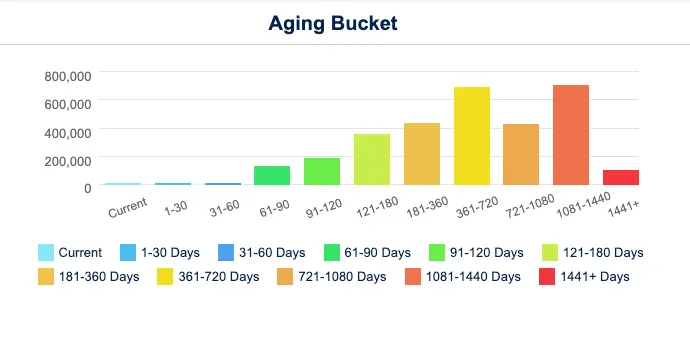
Portfolio columns for 30, 60, 90, and 120+ days, plus account aging through 1,441+ days past due.
Shared AR inbox with seven email categories, so follow-ups stop living in personal mailboxes.
A five-stage cycle running from early notice to final notice and broken promise follow-up.
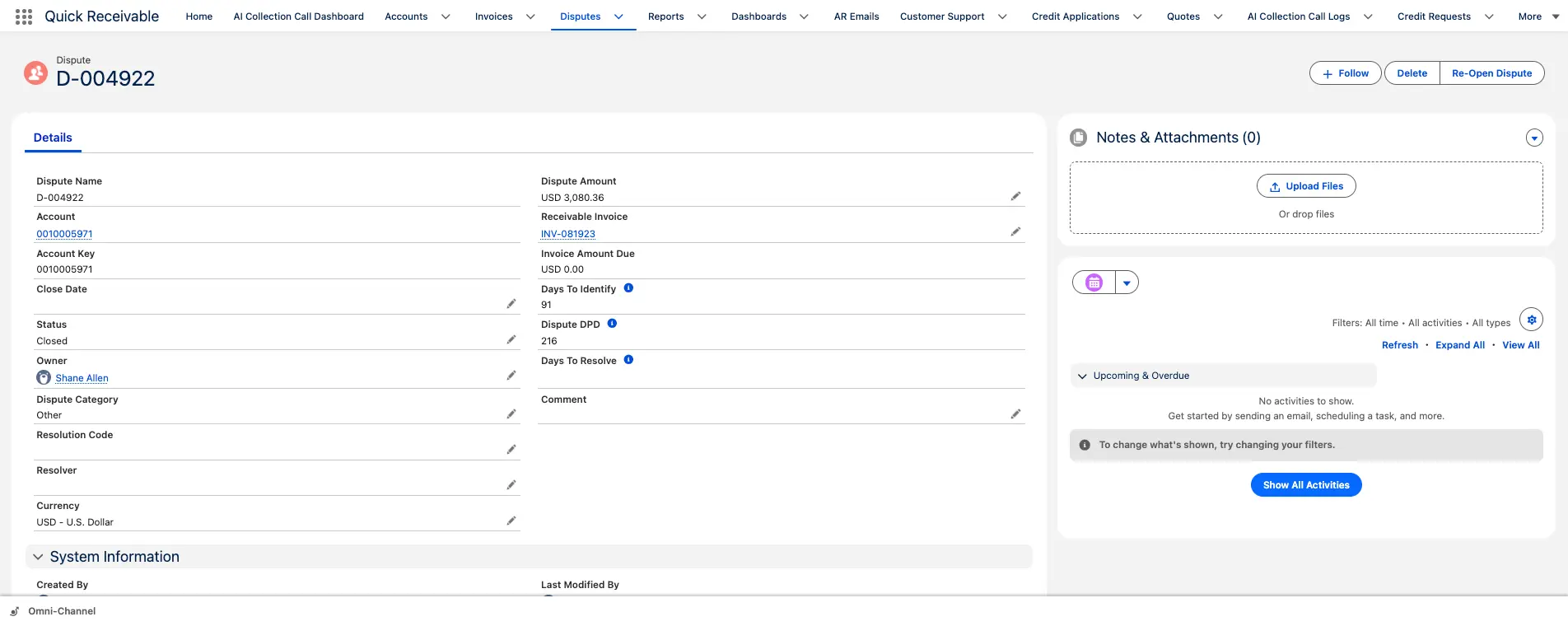
Category, owner, resolver, resolution code, days to identify, and days to resolve on each claim.
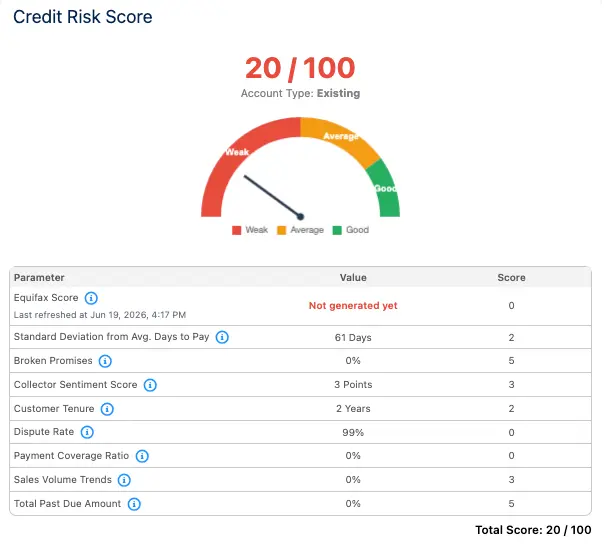
Applications, Equifax data, and payment behavior combined into a 0 to 100 score with stored history.
One receipt split across multiple invoices, marked Applied or Partially Applied, fully traceable.
Salesforce dashboards for total AR, overdue AR, current due, DSO, and results by collector.
Figures below describe how the platform works and what it has delivered in production, not projected savings.
Credit risk score per account, combining Equifax report data, payment timing, broken promises, and dispute rate
Days past due covered by account-level aging, so nothing ages out of view before it is written off
SAP delta synchronization in a live enterprise deployment, replacing a once-daily refresh cycle
Months to migrate a legacy collections platform with open disputes and collector notes intact
The last two figures come from a live deployment with WillScot, North America's leading provider of modular space and portable storage solutions, where Quick Receivable replaced a legacy collections system ahead of its decommissioning deadline. The full AR transformation case study covers the SAP integration and data migration in detail.
A manufacturer's receivable rarely fails because a customer refuses to pay. It fails because the invoice does not match what the customer believes it received.
Most finance teams feel four or five of these at once, long before they start evaluating accounts receivable collections software.
Consolidated balances mask the division that is actually bleeding cash.
Short-pays taken in March get researched in June, after the proof of delivery is gone.
Collectors chase balances without the reference the buyer's AP desk needs.
Terms extended on instinct, reviewed only after a default lands.
Reminders go out when a collector has time, which is never at month end.
One wire covers a dozen invoices and the remittance arrives separately.
Discrete, process, and contract manufacturers across the United States run the same collection cycle with very different invoice complexity.
Release-based shipments, EDI invoicing, and OEM chargebacks for packaging, labeling, and premium freight.
Milestone billing, progress payments, and service invoices that age separately from capital equipment.
Volume rebates, container deposits, and tolling arrangements that create recurring credit memo activity.
Distributor price protection, ship-and-debit claims, and high invoice counts against a short customer list.
Custom jobs, partial releases, and retention held until final inspection or installation sign-off.
Tooling amortization, resin surcharges, and minimum order adjustments that trigger customer queries.
Trade promotions, spoilage claims, and retailer deductions arriving faster than the team can clear them.
Seasonal dating programs, contractor credit exposure, and job-site delivery disputes.
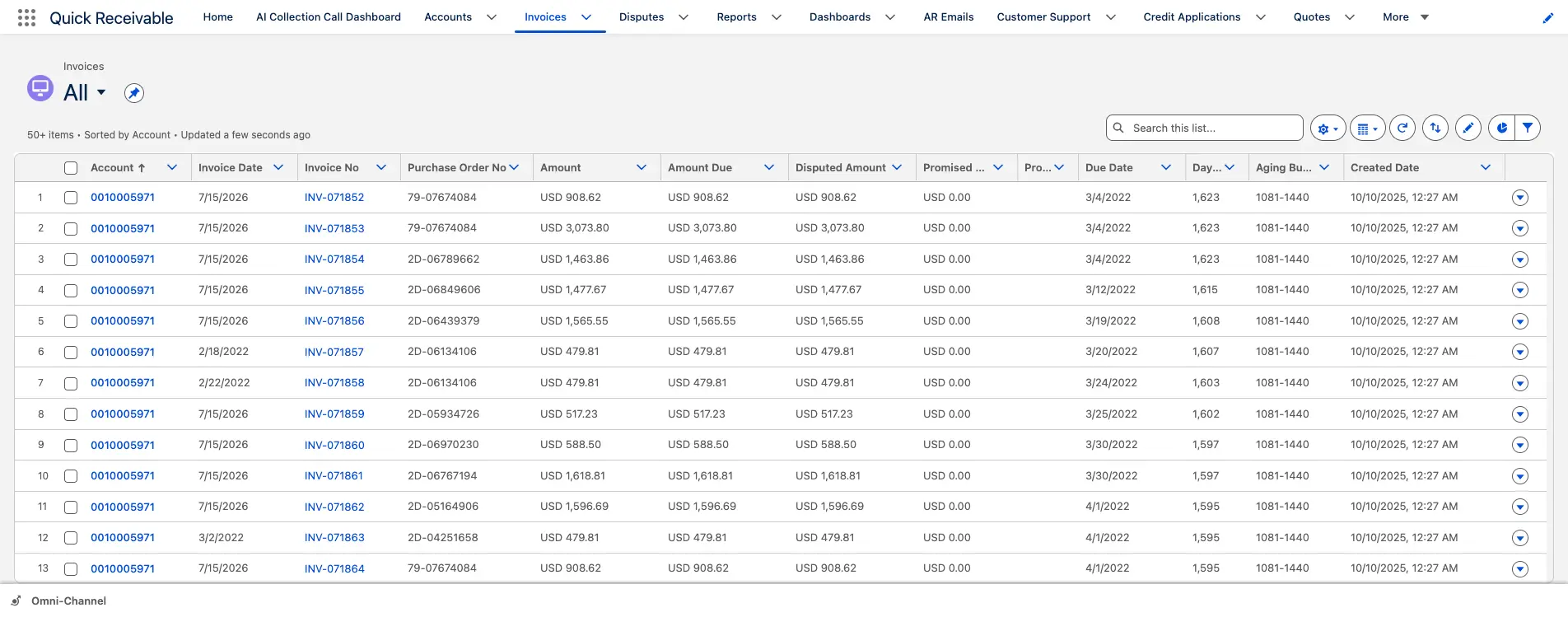
Invoice list with ERP references and dispute flags
An accounts payable clerk at an OEM will not release payment against an invoice number alone. They want the order, the release, the purchase order, and the plant that shipped it. Those fields sit on the invoice record, so a collector answers the question on the first call instead of emailing the plant.
Most manufacturers discover a receivable problem a quarter late, when the consolidated aging finally shows it. Here the aging profile sits on the account itself, so a controller sees where the balance is, who owns it, and how long it has been there.
For a baseline before any software conversation, the DSO calculator gives you a starting number in two minutes.
Account-level AR aging by bucket
Dispute record with owner, reason and resolution timing
Freight allowances, price variances, quality claims, and OEM chargebacks are the largest single source of unresolved manufacturing receivables. The problem is ownership, not intent. A deduction taken in one quarter gets researched in the next, by which point the proof of delivery is gone and the credit is issued by default.
Teams clearing high claim volume pair this with AR deductions management software for reason-code reporting across the portfolio.
Manufacturers carry concentrated exposure. A handful of accounts can represent most of the open ledger, and a single failure moves the bad debt number for the year. Credit signals that usually sit in separate reports are combined into one score.
Your team keeps the final decision under your own credit policy, with credit management sitting where collectors already work.
Credit Risk Scorecard on a Weak to Good scale
Dunning templates across the collection cycle
The same sequence applies to a $900 spare parts invoice and a $400,000 equipment release. Reminders follow the invoice rather than the collector's calendar, and promises to pay are recorded on the invoice with the promised amount and date.
Sequencing and template control are handled through dunning management software.
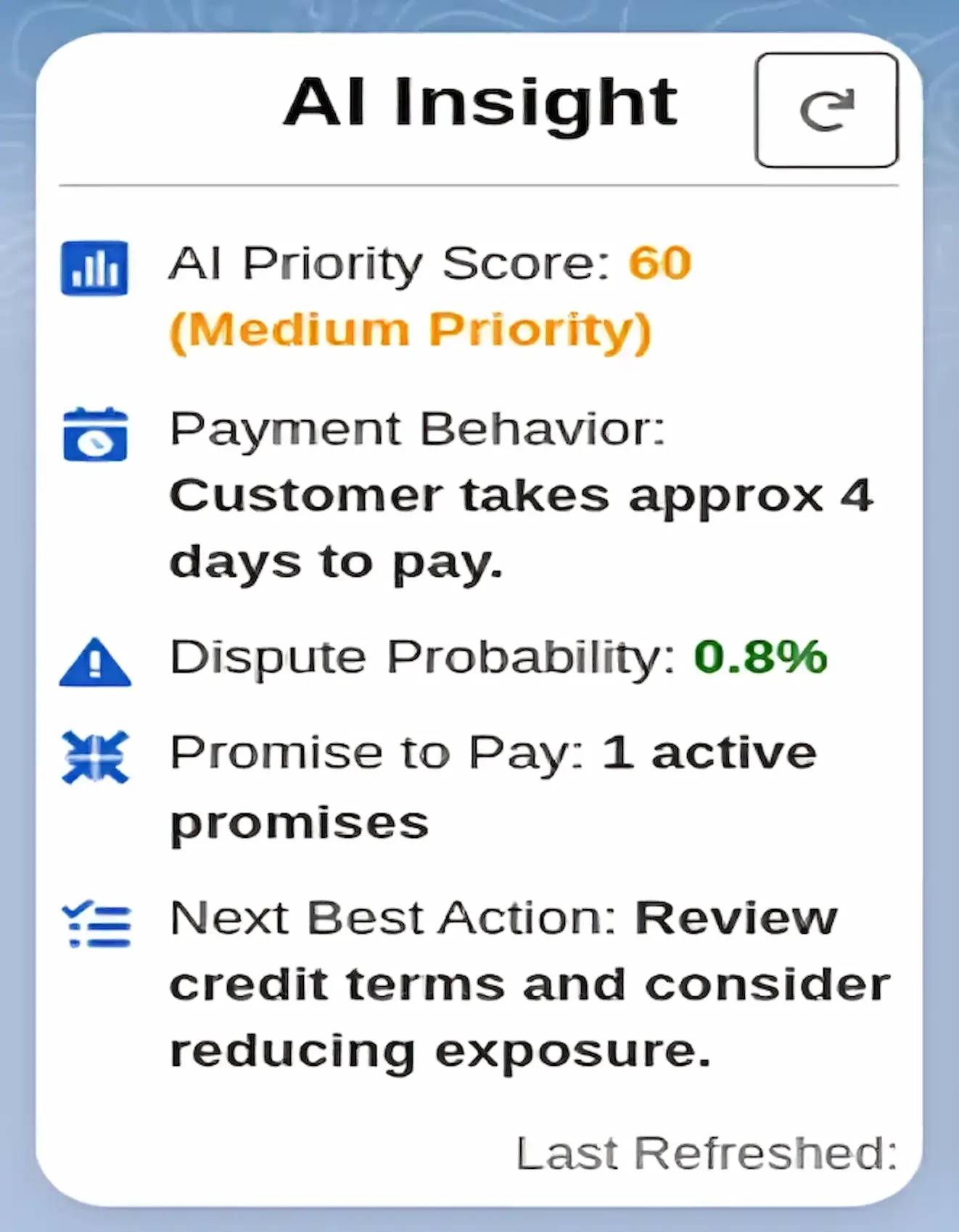
Lean credit teams are the norm in manufacturing. AI Insight reviews overdue balances, disputes, payment behavior, and credit use, then assigns a priority score and recommends the next action for each account, so the working list is built before the day starts.
Contractor credit application and risk scorecard
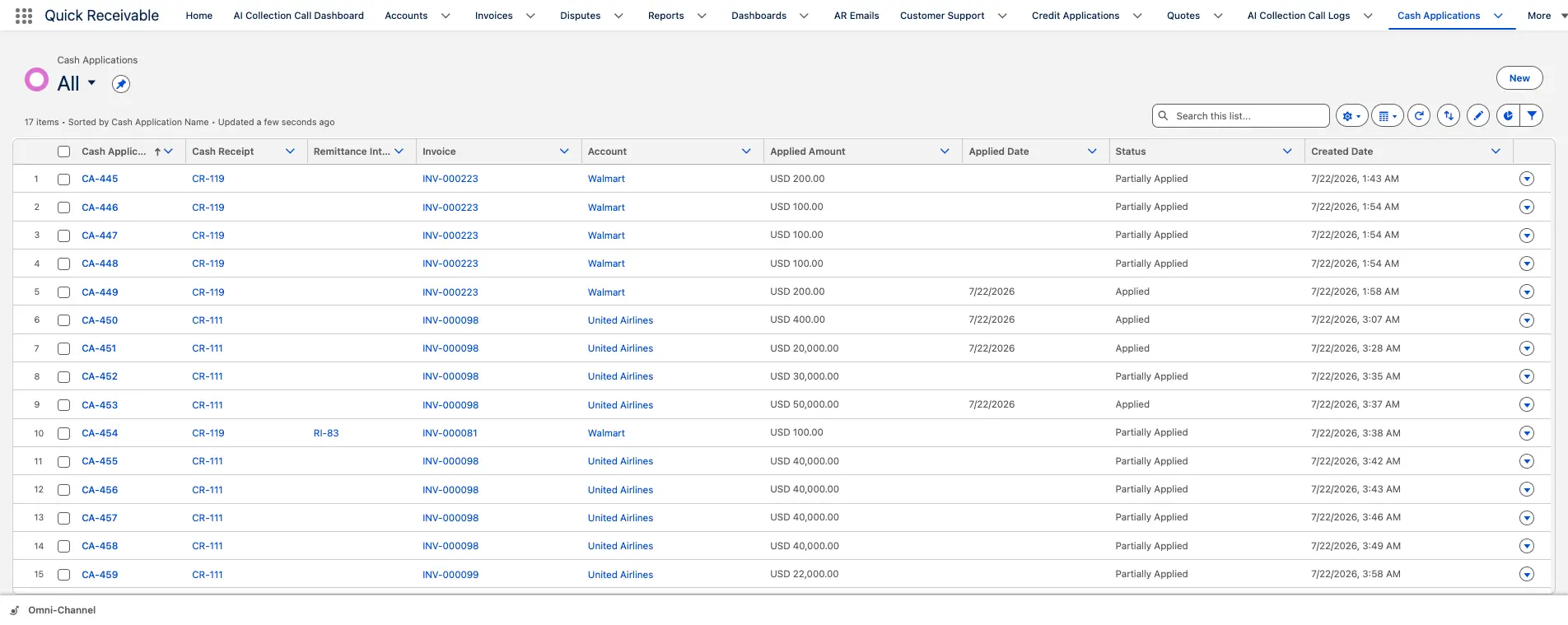
One receipt matched across multiple invoices
Manufacturing customers pay in batches, and the remittance often arrives separately from the funds. Available remittance information matches a receipt to the correct invoices, and Cash Receipt Remittance Mapping records exactly how the payment was divided.
That audit trail is what makes month-end cash application defensible when auditors ask.
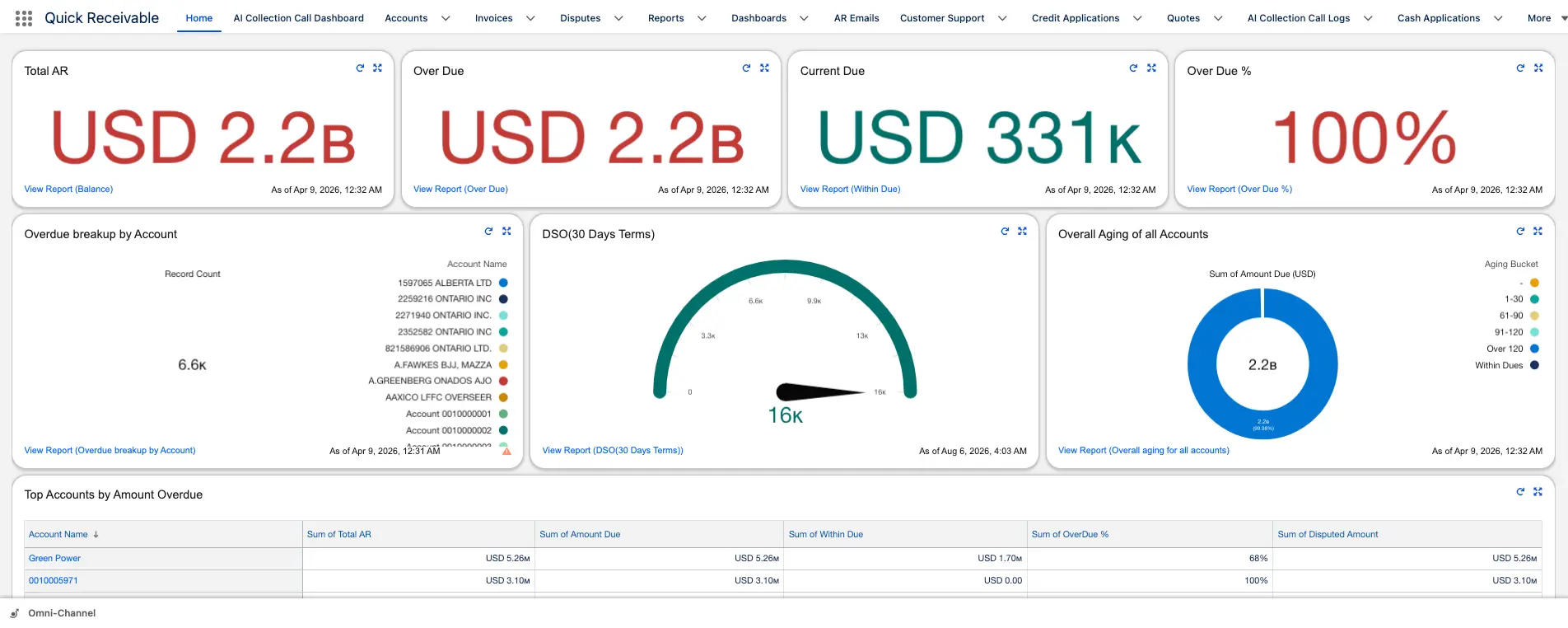
Month-end aging usually gets rebuilt by hand from ERP exports. Here it is a standing dashboard, which means the number in the review meeting matches the number the collector saw that morning.
That audit trail is what makes month-end cash application defensible when auditors ask.
Management dashboard with DSO and collector results
The customer relationship and the receivable belong on the same record.
Most AR tools sit beside the CRM and sync overnight. That gap is where manufacturing collections go wrong: a rep negotiates a new program with a customer sitting 90 days past due, service issues a credit the credit team is still disputing, two people email the same buyer with different numbers on the same afternoon. The trade-offs between native and integrated AR architecture come down to the five rows below.
| Working method | Bolt-on AR tool beside the CRM | Quick Receivable inside Salesforce |
|---|---|---|
| Where the balance lives | Separate system, refreshed on a sync schedule | On the same account your commercial team opens daily |
| ERP references on the invoice | Often stripped during transfer | SAP order number, purchase order, plant name, contract status retained |
| Data freshness | Typically once daily | Delta loads run multiple times a day in production deployments |
| Reporting | A second BI layer or manual exports | Salesforce dashboards, exportable to PDF or Excel |
| Sales and credit alignment | Two versions of the customer | One record showing aging, disputes, score, and payment history |
Nothing here is a separate product. Aging, dunning, disputes, credit scoring, and cash application are modules of one accounts receivable feature set, licensed and deployed together.
It manages the receivable side of the order-to-cash cycle for manufacturers, covering invoice tracking, AR aging, collections, payment reminders, deductions and disputes, credit risk, cash application, and reporting. Quick Receivable does this inside Salesforce, so the balance sits on the same customer record your commercial team uses.
Yes. Invoice records carry ERP references including SAP order number, purchase order number, contract status, and plant name. In one enterprise deployment, delta synchronization runs three times daily, replacing a once-daily refresh that left receivables data stale for most of the business day.
A deduction is logged as a dispute against the invoice with a category, owner, resolver, and resolution code. Days to identify and days to resolve are tracked, collection reminders can pause while the claim is open, and a closed claim can be reopened while keeping its full history.
New or growing accounts submit a credit application capturing business name, tax ID, legal entity type, and Dun and Bradstreet number. That links to a scorecard combining Equifax credit report data, payment timing, broken promises, and dispute history into a score from 0 to 100 on a Weak to Good scale. Your team still makes the final decision under your own credit policy.
Available remittance information matches the receipt to the correct invoices. The payment can be split across them, each match is marked Applied or Partially Applied, and remittance mapping records how the payment was divided so any applied amount traces back to the original cash receipt.
Discrete and process manufacturers including automotive and Tier 1 suppliers, industrial equipment, machinery and metal fabrication, chemical and coatings, electrical and electronic components, plastics and packaging, food and beverage processing, and building products.
It depends on data volume and integration scope. In one enterprise migration, a legacy collections platform was replaced in under three months with open disputes, customer contacts, and historical collector notes preserved, ahead of the old system's decommissioning deadline.
No. Dashboards and reports are built in Salesforce, covering total AR, overdue AR, current due, DSO, results by collector, and top overdue accounts and invoices. Reports export to PDF or Excel.
Walk through aging, deductions, credit scoring, and cash application against your own process. No preparation needed.
Schedule a Free Demo