100% Salesforce native

Equipment Rental Accounts Receivable Software

Rental revenue bills again every cycle whether the last invoice was paid or not. Quick Receivable tracks recurring rental balances, off-rent and damage disputes, payment commitments, and customer credit exposure inside Salesforce, so a slow account stops quietly accumulating another month on rent.

The Problem

What equipment rental accounts receivable software has to control

A balance that grows on a billing cycle while the asset stays out on a customer's site.

Rental is the one trade where a receivable problem compounds automatically. Every cycle adds another invoice to an account that has not paid the last one, and the equipment is still on hire. Quick Receivable is the rental build of the same B2B accounts receivable software used across manufacturing, distribution, and construction.

hero-shape
1

Contract and invoice detail

Order reference, purchase order, contract status, disputed amount, and days past due.

2

Recurring balance aging

Aging buckets for 30, 60, 90, and 120+ days, continuing well past a year.

3

Reminder cycle

Early, due, past due, and final notice running automatically on every cycle invoice.

4

Reminder cycle

Early, due, past due, and final notice running automatically on every cycle invoice.

5

Payment commitments

Promised amount and date held on the invoice, with broken promises counted.

6

Customer credit exposure

Applications, limit requests, and a 0 to 100 score before more fleet is released.

7

Cash application

One payment split across cycle invoices, marked Applied or Partially Applied.

8

AR reporting

Dashboards for total AR, overdue AR, current due, DSO, and results by collector.
Proven in rental

Built with a national rental business, not adapted for one

Figures below describe how the platform works and what it has delivered in production, not projected savings.

hero-shape
3x daily

SAP delta synchronization in a live rental deployment, replacing a once-daily refresh cycle

Under 3

Months to replace a legacy collections platform with open disputes and collector notes intact

0 to 100

Credit risk score per customer, combining Equifax report data, payment timing, broken promises and disputes

1,441+

Days past due covered by account-level aging, so an old balance never disappears into a final bucket

The first two figures come from the deployment with WillScot, North America's leading provider of modular space and portable storage solutions, where Quick Receivable replaced a legacy collections system ahead of its decommissioning deadline. That work is the closest possible match to a rental AR process, and the full AR transformation case study covers the SAP integration and migration in detail.

Pain points solved

Why rental receivables compound instead of just aging

In most industries a slow customer stops costing you more. In rental they keep the asset, and the next cycle invoices anyway.

That compounding is why rental finance teams tend to adopt accounts receivable collections software earlier than their peers in other trades.

hero-shape
1

Still on rent, still unpaid

The account is ninety days down and the fleet is on site earning nothing.

  • Total AR, past due, and max days past due per customer
  • Accounts ranked by past due, credit limit, or priority score
  • Credit usage percentage visible on the account
2

Off-rent date disputes

The customer says it was called off two weeks before the system recorded it.

  • Disputed amount flagged against the invoice
  • Category, owner, and resolver on every claim
  • Days to identify and days to resolve measured
3

Damage and cleaning charges

Return condition charges are contested more often than the rental itself.

  • Claim logged against the specific invoice
  • Reminders pause while the claim is genuinely open
  • Closed claims reopened without losing the trail
4

Delivery and ancillary charges

Transport, fuel, and environmental fees are short-paid as a matter of routine.

  • Dispute rate counted into the customer's risk score
  • Open claims viewed across the business from one list
  • Resolution code recorded on settlement
5

Branch releases the next order

Another machine goes out to a customer already flagged by the credit team.

  • Aging and credit usage on the account everyone opens
  • Named collector assigned to each customer
  • Shared sticky note carrying the current position
6

Payments across many cycles

One payment covers four months of cycle invoices and disputes two of them.

  • Split a single payment across multiple invoices
  • Mark each match Applied or Partially Applied
  • Trace any applied amount back to the original receipt
Who this is built for

Accounts receivable automation across rental fleets

National, regional, and independent rental businesses across the United States, hiring to contractors, industrial sites, utilities, and event operators.

hero-shape

Modular space and storage

Long hire periods, site relocations, and monthly billing that runs for years on one contract.

Aerial and general construction

High unit counts on one jobsite, frequent off-rent calls, and damage on return.

Earthmoving and heavy equipment

High-value assets where a single unpaid account carries serious exposure.

Power, HVAC and climate control

Emergency hires arranged quickly, with credit terms agreed after the fact.

Pump, flow and trench safety

Project-length hires billed alongside consumables and service attendance.

Scaffolding and access

Erect, hire, and dismantle billed in stages with variations along the way.

Tool and small equipment

Very high transaction volume at low values across a branch network.

Event and specialty rental

Short intense hires, deposits, and damage settlements after the event closes.

Customer visibility

Customers ranked by past due and credit limit

Customer visibility

See the customer, not one contract at a time

A contractor may have units on hire from three branches under four contracts. Each branch sees a manageable balance. The credit team needs the total, ranked against every other customer, before deciding whether the next release goes out.

  • Priority score on every account to order the day's work
  • Credit limit and total past-due balance shown together
  • Aging balances grouped by 30, 60, 90, and 120+ days past due
  • Named collector and shared sticky note for context
AR aging

Rental AR aging that shows the balance building cycle by cycle

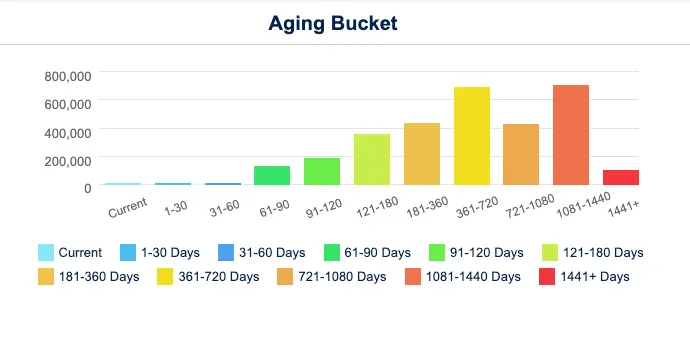
A rental account rarely fails in one month. It shows three cycles at thirty days, then four at sixty, and by the time it reaches the exception report the exposure has multiplied. Seeing the shape of the balance early is the whole advantage.

  • Portfolio aging columns for 30, 60, 90, and 120+ days past due
  • Account-level chart continuing through 360, 720, and 1,441+ days
  • Aging Bucket Current report showing each account's balance by bucket
  • Management dashboard covering total AR, overdue AR, current due, and DSO

To size the exposure in cash terms first, the DSO calculator takes two minutes.

AR aging

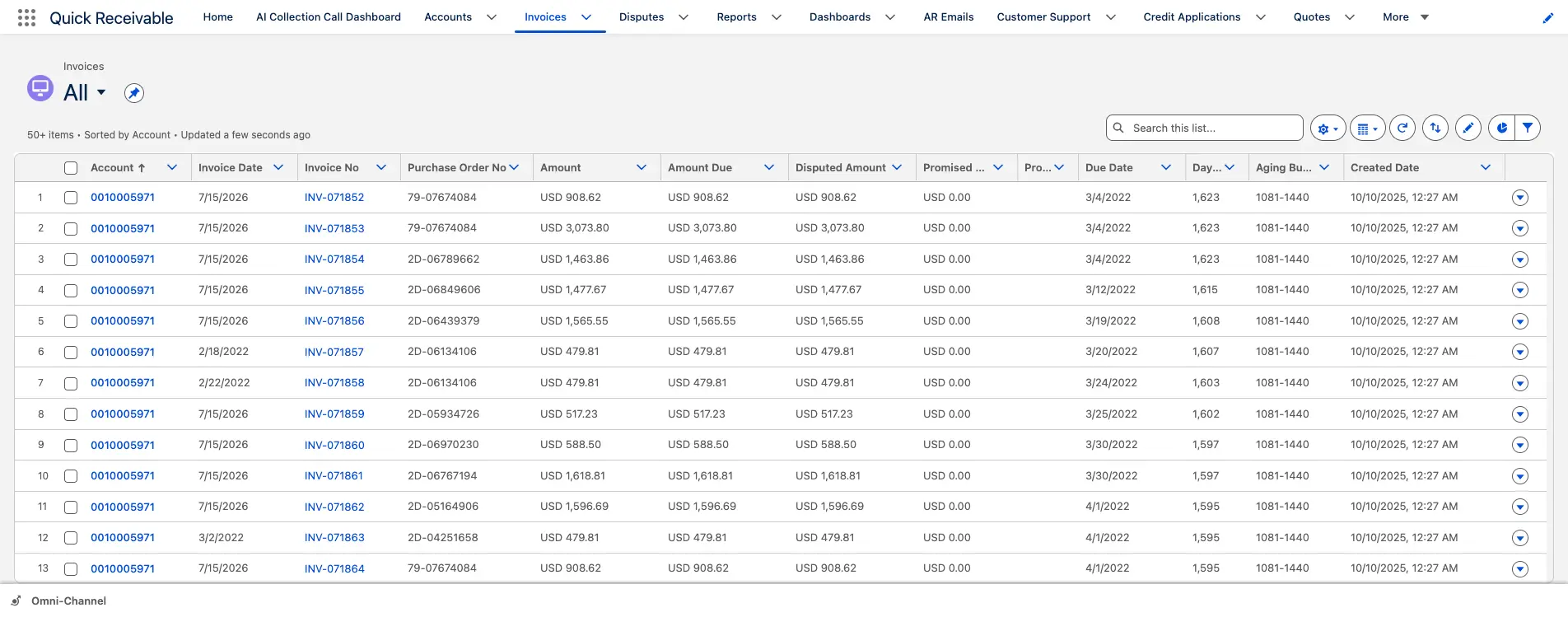
Aging across every cycle invoice on the account

Invoice tracking

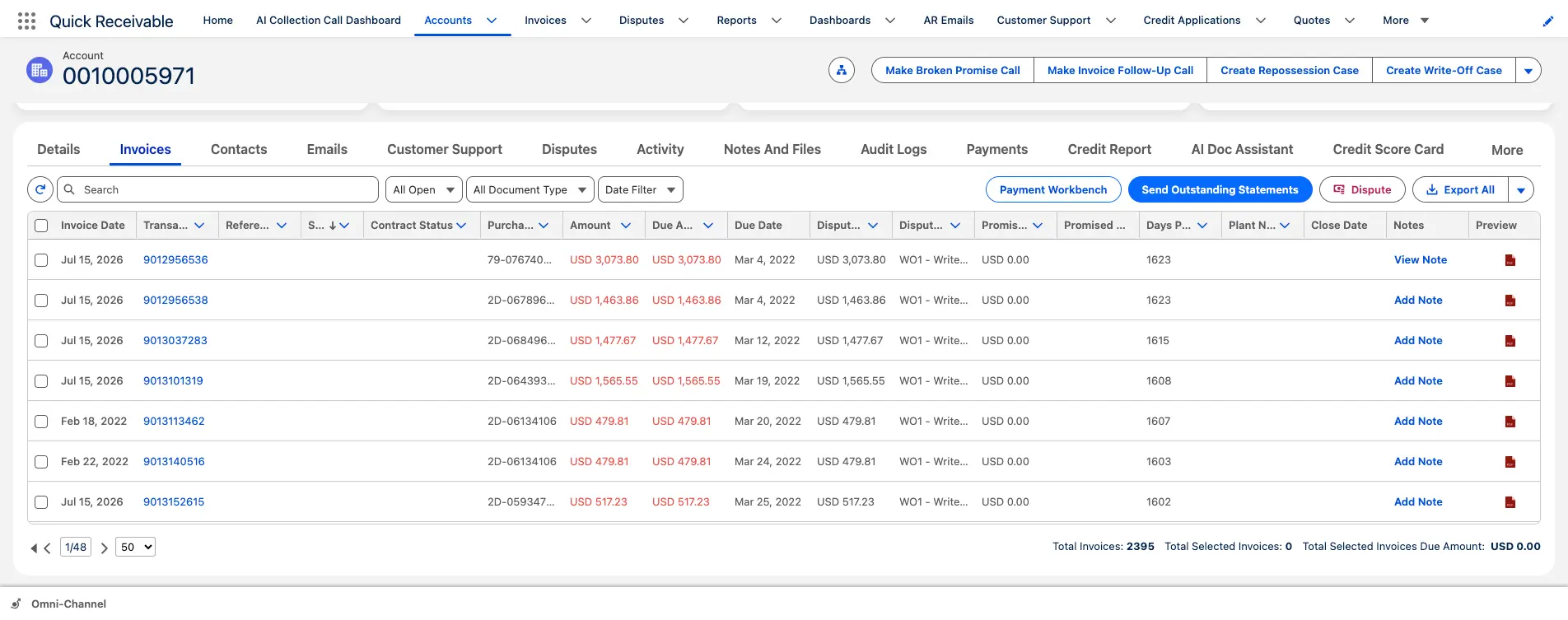
Cycle invoices with contract status and dispute flag

Invoice tracking

The contract reference that settles the argument on the first call

Rental disputes are usually questions of record. Which purchase order covered this hire, was the contract still open on that date, what was already disputed last cycle. With those fields on the invoice, the collector answers rather than investigates.

Order ReferencePurchase Order No.Contract StatusDisputed AmountPromised AmountPromised DateDays Past Due
  • Send an outstanding statement directly from the invoice list
  • Flag an invoice as disputed with one click
  • Apply a payment from the same screen using Payment Workbench
Disputes and claims

Off-rent, damage and delivery disputes settled on a deadline

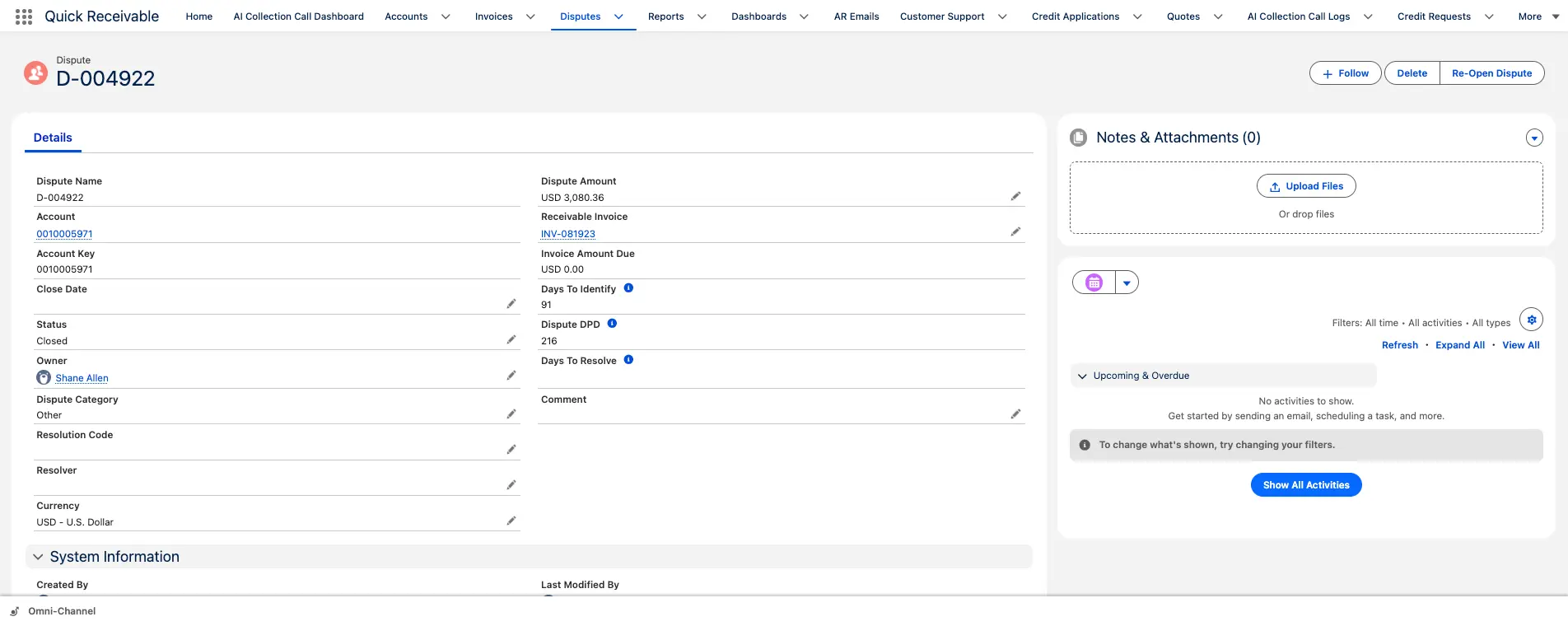
Rental disputes are rarely about whether the hire happened. They are about dates and condition, which means they depend on records that get harder to defend the longer the claim sits open and the people involved move on to other sites.

  • Category, owner, resolver, and resolution code on every claim
  • Days to identify and days to resolve measured per claim
  • Collection reminders pause while a claim is genuinely open
  • Reopen a closed claim without losing its history

Open claims across the customer base are worked from one list in dispute management.

Disputes and claims

Off-rent and damage claims tracked to resolution

Collections

Payment commitment held on the invoice

Collections

Commitments that are followed up before the next cycle bills

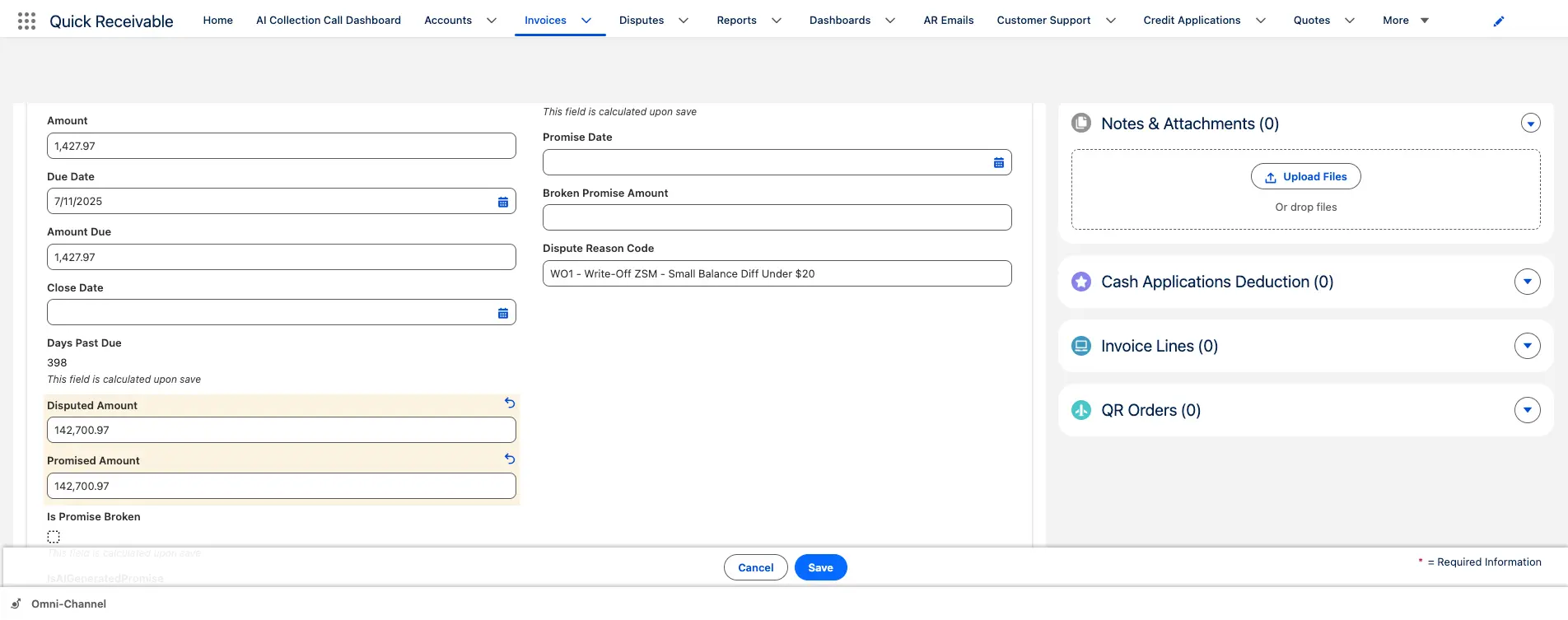
Rental collections run against the clock of the billing cycle. A promise made this week matters because if it breaks, the account gains another invoice before anyone reviews it. Recording the commitment turns that into a tracked event rather than a memory.

  • Promised amount and date recorded on the invoice
  • Missed promises counted toward the account's broken promise total
  • Broken promise follow-up template ready to send
  • AI collection calls placed when a promised date passes, with outcome and sentiment logged

Reminder sequencing across the cycle is configured in dunning management software.

Credit and risk

Contractor credit checked before the fleet leaves the yard

Rental credit decisions are made under pressure. A customer needs equipment today, the branch wants the utilisation, and the application is processed alongside the delivery booking. The exposure then persists for as long as the asset is out.

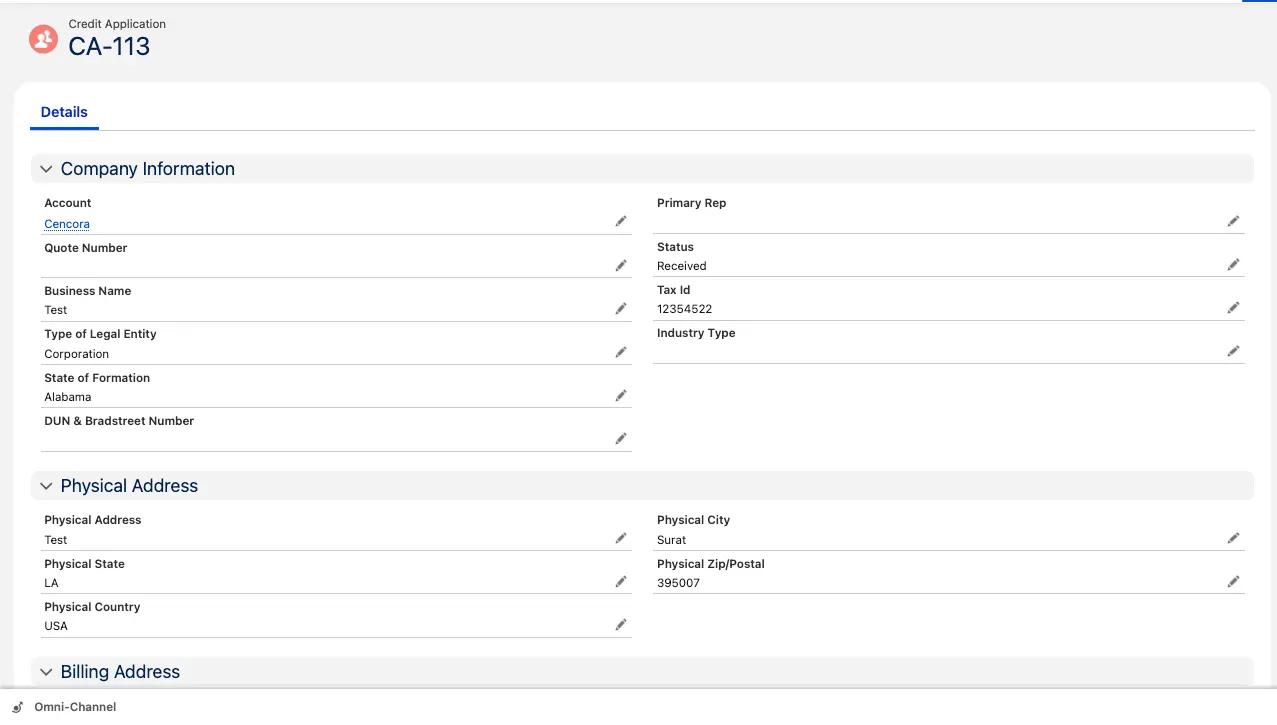
  • Applications capture business name, tax ID, legal entity type, and D&B number
  • Every application links to its Credit Risk Scorecard
  • Credit requests tracked for new or higher limits as hires grow
  • Score history retained so deterioration shows before the next release

Your team keeps the final decision under your own policy, with credit management in the same place collectors work.

Credit and risk

Customer credit application and risk scorecard

Payments and cash

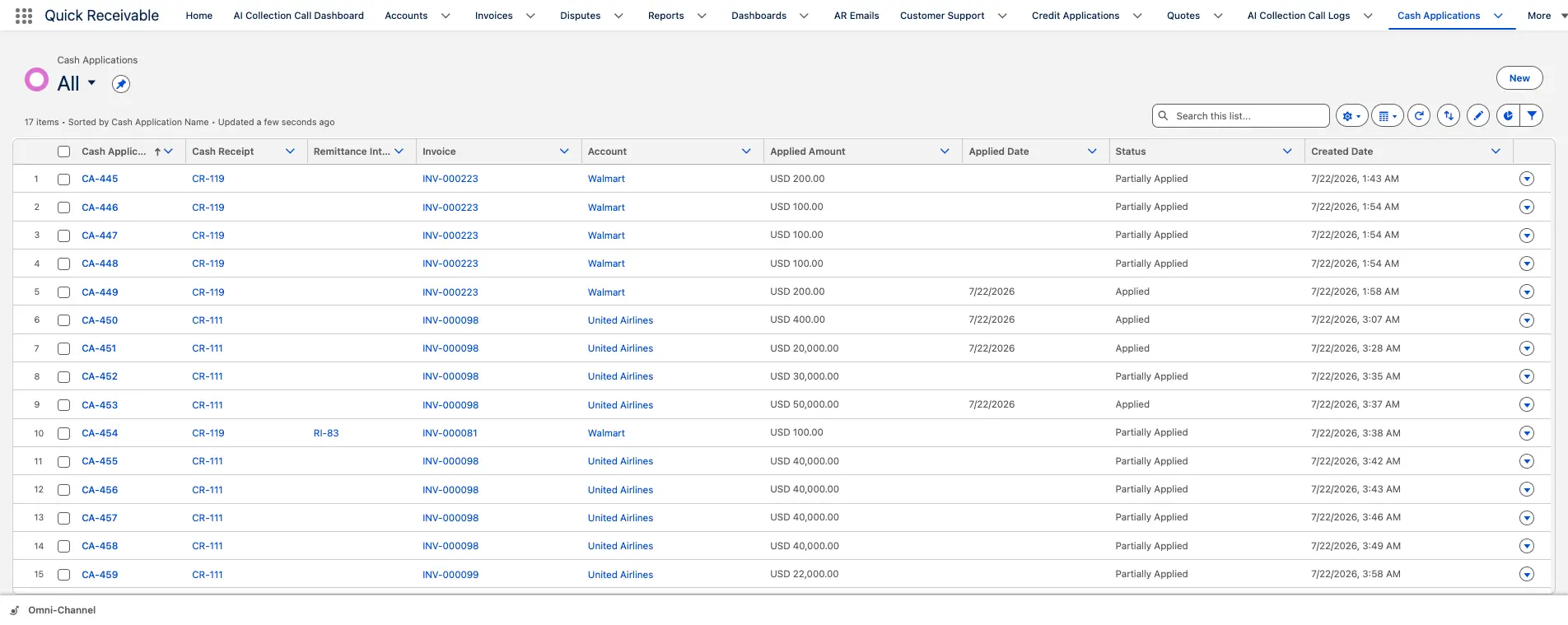
One payment split across several cycle invoices

Payments and cash

Applying payments across months of recurring rental invoices

A customer catching up rarely pays one invoice. They pay an amount that covers some cycles fully, some partially, and leaves the disputed ones alone. Recording that split accurately is what stops the same balance being chased twice.

  • Split one payment across multiple invoices when needed
  • Mark each match Applied or Partially Applied
  • Cash Receipt Remittance Mapping records how the payment was divided
  • Complete payment history retained per customer

That trail is what keeps month-end cash application defensible when auditors ask.

Salesforce native

Why rental businesses run accounts receivable inside Salesforce

The branch releasing the equipment and the team chasing the balance need the same screen.

Rental is a utilisation business, so the pressure is always to get the asset out. That instinct is right until the customer is ninety days down with three units on site. Keeping aging, claims, and credit usage on the account the branch already opens is what makes the exception visible at the moment it matters. The trade-offs between native and integrated AR architecture come down to the rows below.

hero-shape
Working methodBolt-on AR tool beside the CRMQuick Receivable inside Salesforce
Exposure before the next releaseFinance knows, the branch does notAging, credit usage and score on the account everyone opens
Customer across branches and contractsViewed contract by contractOne account record holding every open cycle invoice
Data freshnessTypically once dailyDelta loads run multiple times a day in production deployments
Dispute status during a hireTracked separately from the accountOpen claims visible on the customer record with owner and age
ReportingA second BI layer or manual exportsSalesforce dashboards, exportable to PDF or Excel

Aging, reminders, claims, credit scoring, and cash application are modules of one accounts receivable feature set, deployed together rather than bought separately.

Equipment rental accounts receivable software FAQs

hero-shape

What is equipment rental accounts receivable software?

It manages the receivable side of the rental billing cycle, covering invoice and contract detail, AR aging, collections, payment reminders, off-rent and damage disputes, customer credit risk, cash application, and reporting. Quick Receivable does this inside Salesforce, so the balance sits on the same customer record your branches and sales team use.

Can it handle recurring cycle billing on long hires?

Yes. Every cycle invoice sits on the customer account with its own days past due, and account-level aging continues past 120 days through 360, 720, and 1,441+ days, so a balance built over many cycles stays visible as a whole.

How are off-rent date and damage disputes handled?

Each is logged as a dispute against the invoice with a category, owner, resolver, and resolution code. Days to identify and days to resolve are tracked, collection reminders can pause while the claim is open, and a closed claim can be reopened while keeping its full history.

Does the branch see credit exposure before releasing equipment?

Credit usage percentage, total past due, and the risk score sit on the customer account inside Salesforce, so anyone opening the record sees the position rather than relying on a separate finance system they do not use.

How are payment commitments tracked?

The promised amount and promised date are recorded directly on the invoice. If the date passes without payment, it counts toward the account's broken promise total, a follow-up template is ready to send, and an AI collection call can be placed with the outcome and sentiment logged.

What happens when one payment covers several cycle invoices?

Available remittance information matches the receipt to the correct invoices. The payment splits across them, each match is marked Applied or Partially Applied, and remittance mapping records the split so any applied amount traces back to the original cash receipt.

Which rental categories does it suit?

Modular space and portable storage, aerial and general construction equipment, earthmoving and heavy equipment, power and climate control, pump, flow and trench safety, scaffolding and access, tool and small equipment, and event and specialty rental.

Does it replace our rental management system?

No. It handles the receivable side and works alongside the system where contracts and cycle billing originate. Invoice records carry references including order number, purchase order number, and contract status, and in a live rental deployment SAP delta synchronization runs three times daily.

See your rental AR running in a live Salesforce org

Walk through cycle invoice aging, off-rent disputes, credit exposure, and payment matching against your own process. No preparation needed.

Schedule a Free Demo