Recovering Overdue Accounts Inside Salesforce

Debt Collection Software Built Inside Salesforce

100% Salesforce-Native • No Middleware • No External Login • Built Inside Your Salesforce Org

AI-Powered Recovery | Goes Live in 4 Weeks | Fortune 1000 Proven

  • Automated escalation sequences for significantly overdue accounts
  • Risk-based prioritization across your full overdue portfolio
  • Works alongside accounts receivable collections software in the same Salesforce org
  • Part of Quick Receivable's complete suite of AR solutions
50-70%
Bad Debt Reduction
10x
Faster Risk Detection
4 Weeks
Go-Live Timeline
$100
Per User Per Month
Fortune 1000 Proven
100% Salesforce-Native
Implementation Included
No Long-Term Contracts
The Problem

Standard Collections Stop. Overdue Debt Keeps Growing.

When an account moves past your standard dunning cycles, most AR teams have no systematic process left. Overdue debt sits unresolved, gets written off, or gets sent to third-party collectors at significant cost.

hero-shape

Without Debt Collection Software

  • Overdue accounts sit unmanaged after standard dunning fails
  • No systematic escalation beyond manual follow-up
  • High-risk accounts identified too late - 30 to 60 days after deterioration starts
  • Third-party collection agencies cost 20 to 50% of recovered amount
  • Bad debt write-offs averaging 2 to 3% of revenue annually
  • No visibility into which overdue accounts are recoverable

With Quick Receivable Debt Collection Software

  • Automated escalation sequences kick in when standard dunning fails
  • Risk-based prioritization focuses effort on highest-recovery accounts
  • Deteriorating accounts identified within 1 to 3 days
  • Internal recovery managed inside Salesforce - no agency fees
  • Bad debt write-offs reduced to 0.5 to 1% of revenue
  • Real-time recovery analytics across entire overdue portfolio
Features

Debt Recovery Features Built Inside Salesforce

hero-shape

Risk-Based Account Prioritization

Every overdue account is scored using payment history, aging, credit behavior, and dispute frequency. Your team focuses on the accounts most likely to recover, not just the oldest ones.

Automated Escalation Sequences

When standard dunning cycles end without payment, automated escalation sequences take over. Configurable sequences by account segment, overdue amount, and risk tier.

AI Dunning Calls for Overdue Accounts

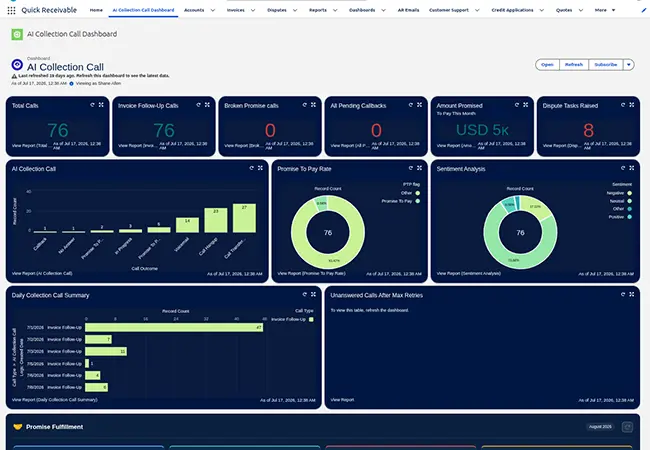
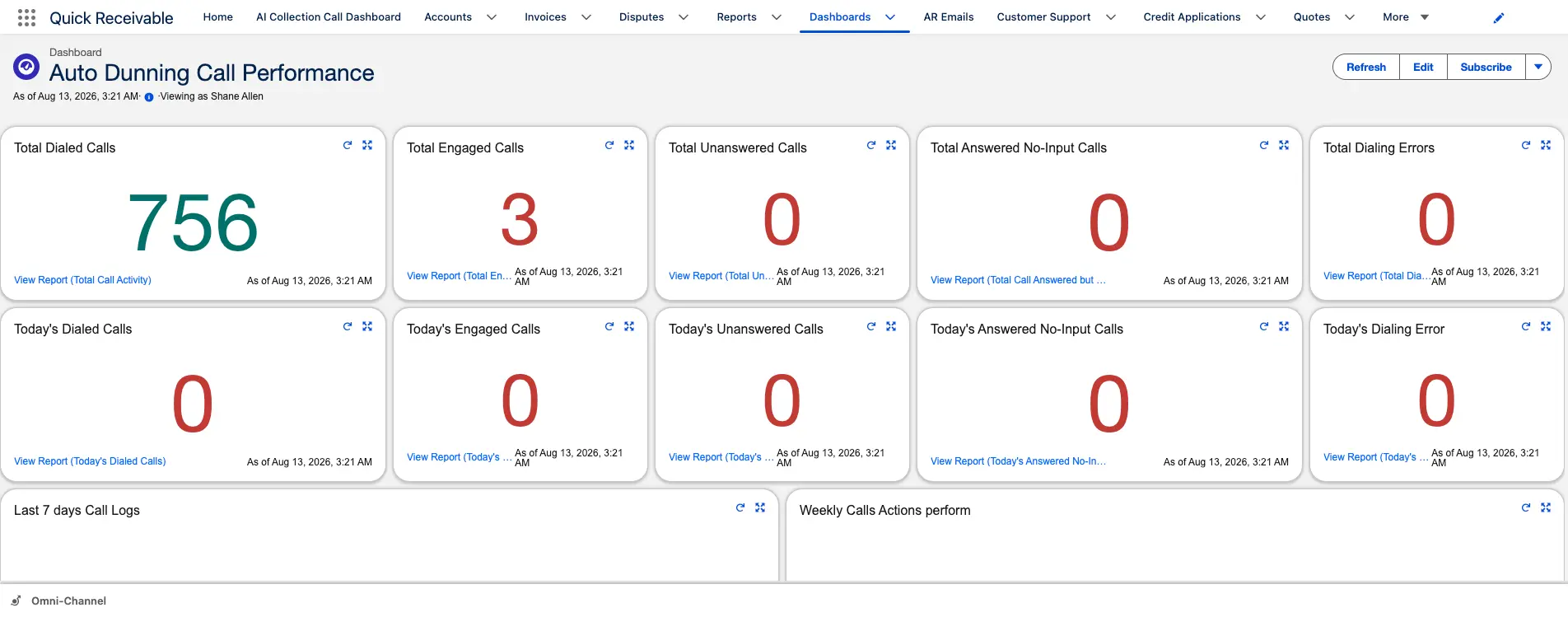
AI-powered voice calls handle routine overdue outreach at scale. Natural conversation, automatic recording, and instant escalation to a human collector when needed.

Credit Hold Automation

Accounts that breach overdue thresholds are automatically placed on credit hold inside Salesforce. No manual intervention required. Hold triggers notify the sales team instantly.

Real-Time Recovery Analytics

Live dashboards show your entire overdue portfolio by risk tier, recovery stage, overdue amount, and collector activity. No stale reports. No spreadsheet reconciliation.

Payment Arrangement Tracking

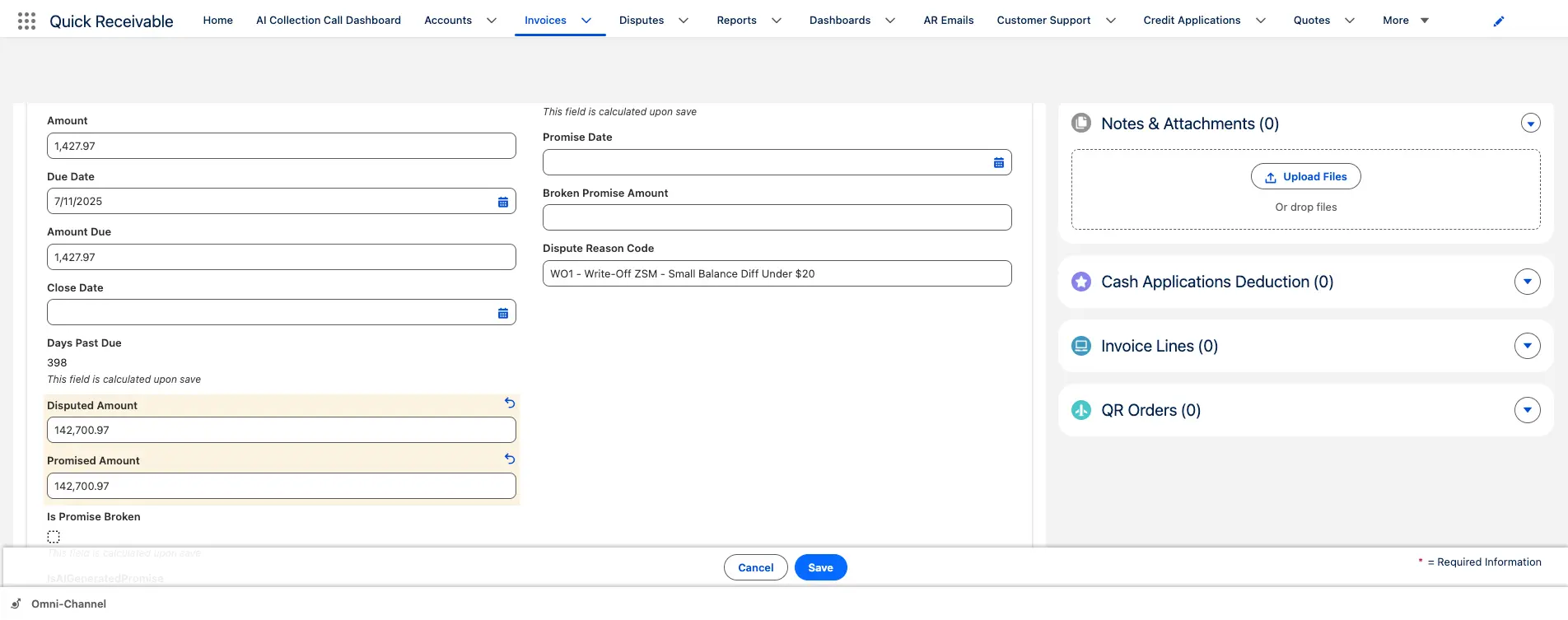
When overdue customers agree to payment plans, every arrangement is logged, tracked, and monitored automatically. Missed payments trigger immediate escalation without manual review.

How It Works

Debt Recovery in Four Automated Steps

hero-shape
01

Identify Overdue Accounts

The Risk Management Agent continuously scores every account. When an account moves past your defined overdue threshold, it is automatically flagged for debt recovery workflow.

02

Prioritize by Recovery Likelihood

Accounts are ranked by recovery probability using payment history, overdue amount, dispute frequency, and credit score. Your team works the highest-probability cases first.

03

Execute Escalation Sequence

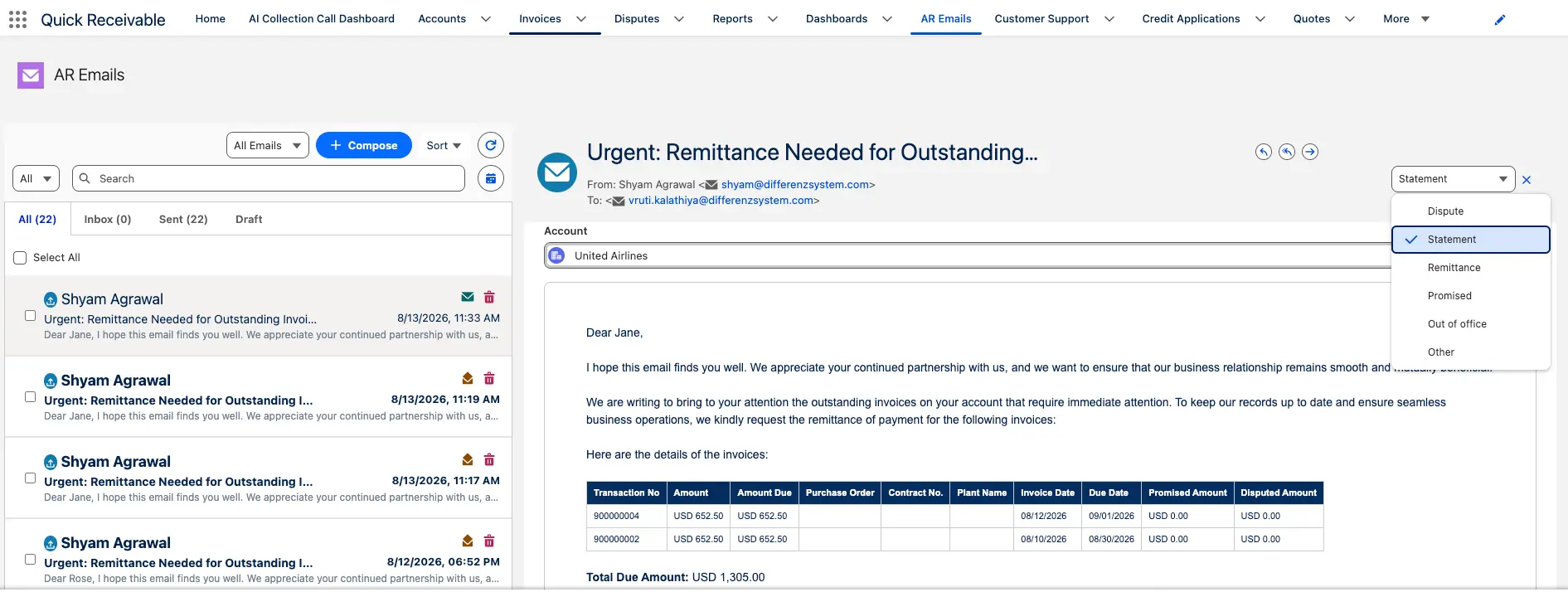
Automated escalation sequences run immediately. AI dunning calls, targeted emails, and credit hold triggers execute without manual decisions on routine overdue accounts.

04

Track to Resolution

Every overdue case tracked to full payment, payment arrangement, or final write-off decision. Complete audit trail inside Salesforce. Recovery analytics updated in real time.

Proven Results

What Debt Collection Software Delivers in Production

hero-shape
50-70% Reduction in bad debt write-offs
10x Faster identification of at-risk accounts
100% Of overdue portfolio monitored continuously
0.5-1% Bad debt rate vs 2-3% industry average
Why Salesforce-Native

Quick Receivable vs Traditional Debt Collection Software

hero-shape
Feature Quick Receivable Traditional Debt Collection Software
Salesforce-native (no middleware) 100% native External system, API integration required
Shares data with AR automation software Same Salesforce org Separate system, manual data transfer
Go-live timeline 4 weeks 3 to 9 months
Implementation cost Included in subscription $50K to $200K+ separate
Real-time risk scoring Continuous, automated Batch updates, manual review
AI dunning calls Included Add-on or not available
Works alongside collections software Same platform Separate platforms, duplicate data
Fortune 1000 Case Study

WillScot Manages $3B+ in AR and Debt Recovery Inside Salesforce

hero-shape

"Quick Receivable has fundamentally transformed how we manage collections giving us true transparency into our receivables and collector activity while enabling a smooth transition off our legacy platform in under three months. The result is improved accountability, stronger decision making, and a scalable foundation to modernize credit and collections."

Joshua Nolan Vice President, WillScot (Fortune 1000, $2.4B)

175K

Invoices managed per month in production

$3B+

AR and debt recovery managed annually

4 Weeks

From signed contract to fully live

Zero

Operational disruption during migration

FAQ

Debt Collection Software Questions Answered

hero-shape

What is debt collection software?

Debt collection software automates the process of recovering overdue accounts, including escalation workflows, automated outreach, risk-based prioritization, and payment tracking. Quick Receivable runs this process entirely inside Salesforce with no external login required.

How is debt collection software different from accounts receivable collections software?

Accounts receivable collections software manages the ongoing collections lifecycle for active invoices. Debt collection software focuses on recovering significantly overdue accounts that have moved past standard collections workflows, using risk scoring, escalation automation, and intensive follow-up sequences. Quick Receivable handles both within the same Salesforce org.

Does Quick Receivable's debt collection software require Salesforce?

Yes. Quick Receivable is 100% Salesforce-native. Unlike traditional debt collection tools that integrate with Salesforce through middleware, Quick Receivable runs entirely inside your existing Salesforce org. Your team manages debt recovery from the same interface they already use every day.

How quickly can debt collection software go live?

Quick Receivable goes live in 4 weeks. Implementation is included on every plan at no extra cost. Because it is built natively inside Salesforce, there is no middleware to configure, no external system to integrate, and no lengthy training required for your team.

Can debt collection software and AR automation software run in the same Salesforce org?

Yes. Because Quick Receivable is 100% Salesforce-native, debt collection, AR automation software, and accounts receivable management software all run in the same org, sharing the same customer data, dashboards, and AI agents. There is no duplicate data, no manual sync, and no version conflicts between systems.

Debt collection is one part of Quick Receivable's complete Salesforce accounts receivable automation platform. Explore the full agent suite that powers debt recovery:

Get Started

Stop Writing Off Recoverable Debt

Schedule a 30-minute call with our team. We will show you how Quick Receivable's debt collection software recovers overdue accounts inside Salesforce, with no middleware and no separate system to manage.

Schedule a Free Demo Contact the Team Calculate My AR ROI

No commitment. Implementation included on every plan. Cancel anytime.

Related Solutions