What Are Unbilled Receivables?
Unbilled receivables explained: how they differ from contract assets and accrued revenue, journal entries, ASC 606 treatment, and how to reduce them.
- October 21, 2026
-
 Dadhich Rami
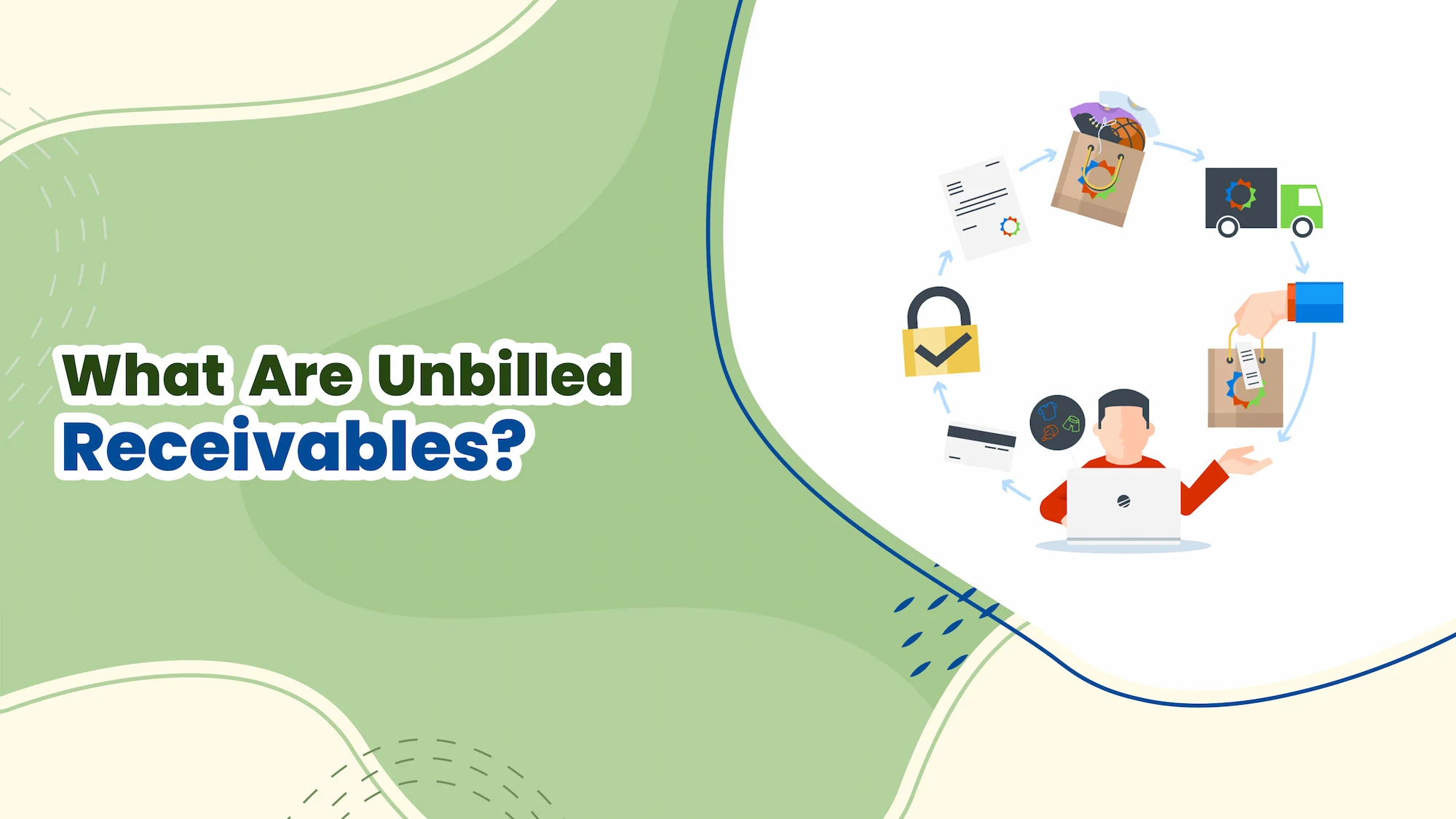
Unbilled receivables explained: how they differ from contract assets and accrued revenue, journal entries, ASC 606 treatment, and how to reduce them.
Dadhich Rami
Unbilled receivables are amounts a company has earned by delivering goods or performing services but has not yet invoiced to the customer. Revenue is recognized when the work is performed, while the invoice is issued later because of a billing schedule, a contract milestone, or a month-end billing cycle. Unbilled receivables are reported as an asset.
An unbilled receivable exists when three conditions are met: the company has performed the work or delivered the goods, it has recognized the related revenue, and it has not yet issued an invoice. When the invoice is sent, the amount moves from unbilled receivables to accounts receivable. The total amount owed does not change, only its billing status.
Unbilled receivables are also called unbilled accounts receivable, unbilled revenue, or accrued revenue, although these terms are not always used consistently.
Unbilled receivables arise whenever revenue is earned before an invoice can be issued. The most common causes are billing in arrears, milestone-based contracts, time-and-materials work invoiced on a set cycle, construction progress billing cutoffs, customer approval requirements, and invoices held because of missing billing data such as purchase order numbers.
For example, an equipment rental company that invoices on the first of each month for the prior month's rentals carries unbilled receivables at every month end. A services firm that can only invoice at the next milestone carries unbilled amounts for work completed toward that milestone. These patterns are common in project-based and rental businesses; our construction and equipment rental pages cover the receivables challenges specific to each.
ASC 606 distinguishes between a receivable and a contract asset. An unbilled amount is a receivable when the company's right to payment is unconditional, meaning only the passage of time is required before payment is due, even if no invoice has been issued. It is a contract asset when the right to payment depends on something other than time, such as completing further work.
These definitions appear in FASB ASC 606-10-45-3 (contract assets) and ASC 606-10-45-4 (receivables). A contract asset is reclassified to a receivable once the right to payment becomes unconditional, for example when a milestone is reached and accepted.
The distinction affects balance sheet presentation and disclosure, because contract assets and receivables are presented separately. Companies should confirm the classification of their specific contract terms with their auditors.
Unbilled receivables are earned and not yet invoiced. Accounts receivable are earned and invoiced but not yet paid. Contract assets are earned, but the right to payment is still conditional. Deferred revenue is the opposite of unbilled revenue: the customer has paid or been billed before the work is performed, so it is a liability.
| Term | Meaning | Balance Sheet Classification |
|---|---|---|
| Unbilled receivables | Earned, not yet invoiced, right to payment unconditional | Asset |
| Accounts receivable | Earned and invoiced, not yet paid | Asset |
| Contract asset | Earned, right to payment still conditional | Asset |
| Accrued revenue | Often used as a synonym for unbilled receivables | Asset |
| Deferred revenue | Billed or paid before the work is performed | Liability |
Our guide to accounts receivable vs deferred revenue explains that difference in more detail.
To record unbilled receivables, debit unbilled receivables and credit revenue when the work is performed. When the invoice is issued, debit accounts receivable and credit unbilled receivables. When the customer pays, debit cash and credit accounts receivable. Revenue is recorded only once, in the period the work was performed.
Example. A company completes $25,000 of services in March and issues the invoice on April 1. The customer pays on April 30.
March 31, recognizing revenue for work performed:
April 1, issuing the invoice:
April 30, receiving payment:
When payment depends on reaching a milestone, revenue recognized before the milestone is recorded as a contract asset, then reclassified to accounts receivable when the milestone is accepted and invoiced.
Example. A $90,000 contract has three milestones of $30,000 each, with payment due only on acceptance of each milestone. By month end, 40% of the first milestone is complete, so $12,000 of revenue is recognized:
The following month, the remaining work on the first milestone is completed and accepted. A further $18,000 of revenue is recognized and the full $30,000 becomes billable:
The contract asset grows as work progresses and moves to accounts receivable once the right to payment is unconditional.
Unbilled receivables appear in current assets when they are expected to be billed and collected within one year or the company's operating cycle. They may be presented as a separate line such as "unbilled receivables" or "contract assets," or combined with accounts receivable and disclosed in the notes. See accounts receivable on the balance sheet for how receivables are presented more broadly.
Unbilled receivables should be aged by the date the work was performed, because the age of an unbilled balance shows whether billing is on schedule. Balances under 30 days usually reflect normal billing timing. Balances between 31 and 90 days usually indicate a missing approval, milestone, or data issue. Balances over 90 days carry a risk that the amount may never be billable.
A weekly review of unbilled aging, with an owner assigned to every balance over 30 days, catches stalled billing before it affects month-end cash.
Unbilled receivables can make DSO look better than actual collection performance, because standard DSO is calculated on billed accounts receivable only. When work is earned but not invoiced, revenue increases while billed receivables do not, which lowers the reported DSO.
Two measures give a complete view:
The gap between billed DSO and total DSO measures billing delay. A growing gap means invoicing, not collections, is slowing cash.
Large unbilled balances delay cash, because the payment term does not start until the invoice is issued. They also increase dispute risk, since customers find it harder to verify charges long after the work was done, and they create revenue risk if old balances cannot be billed because contract conditions or approvals were not met.
Auditors review unbilled receivables closely because they reflect revenue recognized before an invoice exists. Typical requests include the contracts supporting significant balances, evidence that the work was performed such as timesheets or delivery records, invoices issued after period end for amounts unbilled at period end, the basis for classifying amounts as receivables or contract assets, and adjustments made to old balances.
Maintaining a schedule that lists each unbilled balance with its contract, work date, expected billing date, and supporting document makes this review routine.
You can reduce unbilled receivables by shortening billing cycles, aging unbilled balances, linking milestone completion directly to invoicing, collecting billing data such as purchase order numbers at contract start, negotiating progress billing on long contracts, and moving each invoice into collections the day it is issued.
Bill semi-monthly or weekly where contracts allow.
Track them in buckets with assigned owners.
Start the invoicing step as soon as a milestone is accepted.
Collect purchase order numbers and approver details at contract start.
Negotiate progress billing where long milestone gaps tie up cash.
Faster handoffs from billing to collections are one of the levers covered on our DSO reduction page.
40%
DSO reduction70%
less manual work95%
cash match accuracyFind out exactly how much time and money your AR team can save with Quick Receivable. No commitment, no setup required.

AI-powered Accounts Receivable Automation on Salesforce, built to accelerate collections, automate workflows, and improve cash flow.